Organizations can do everything in their power to set themselves up for shipping success only to be derailed by a problem. When it comes to a train shipment, that derailment can be literal… but it can also be figurative with a variety of issues contributing to the reliability of a train schedule.
Railroads are an integral part of the supply chain, and new regulations require them to be more transparent with their data. It is important information that can benefit most organizations, but organizations with an analytics solution are poised to take advantage in the biggest ways. Here’s what’s happening, and how analytics can make an impact.
What kind of data do railroads provide?
The Surface Transportation Board (STB) is an independent federal agency that regulates various modes of surface transportation, primarily freight rail. The agency requires Class I railroads to report certain metrics that affect efficiency and service for companies shipping by rail. A few of the key metrics include speed, dwell time, and cars online.
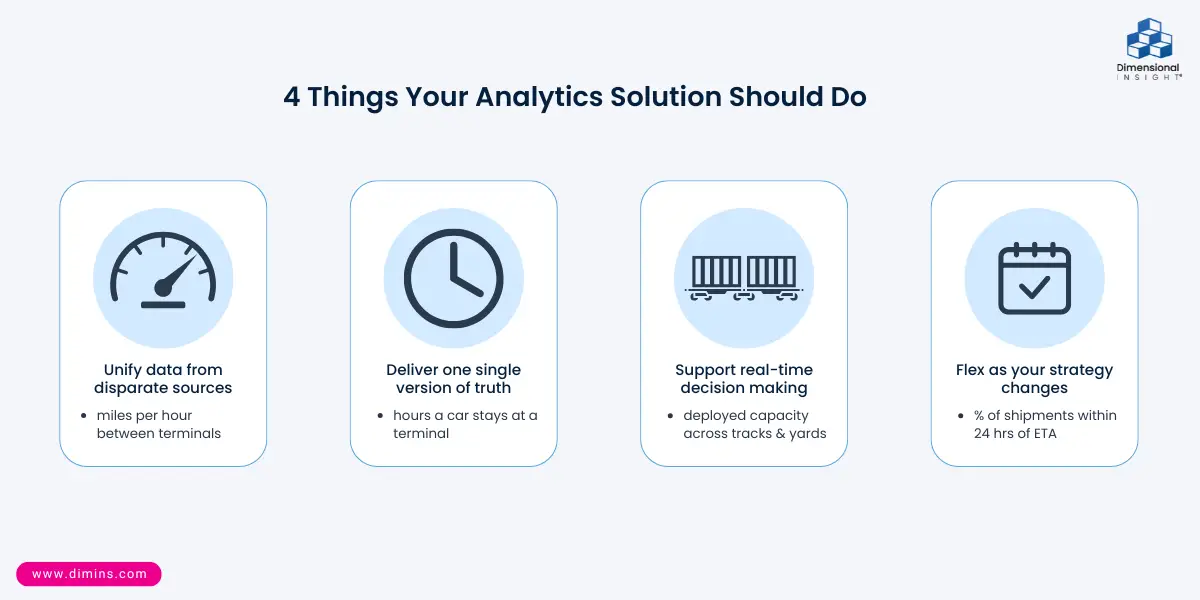
“Speed” is somewhat self-explanatory, measuring the speed of trains in miles per hour. This number does not include time at a terminal, so it shows how fast freight is moving between terminals. “Dwell,” which is measured in hours, measures the amount of time a car stays at a terminal location, with specific rules around what constitutes a stay. “Cars online” is a measure of deployed capacity, including cars on tracks, at customer locations, or in yards.
How are railroads becoming more transparent?
In early May the STB ruled that Class I railroads needed to report two new metrics each week, after years of shippers calling for improved reporting from railroads. Original estimated time of arrival (OETA) measures the percentage of shipments in a week delivered within 24 hours of their estimated arrival time, and industry spot and pull (ISP) is a carrier’s success rate in loading and unloading goods at a facility when the railroad said it would.
Along with the STB’s ruling, the agency has launched a beta version of a portal that it says will make it easier for the public to interpret rail service data. The agency plans to expand the portal in time and improve the visualizations it is offering to the public.
How can organizations use this data?
Overall the STB’s move is good news for shippers. The new portal is meant to be more user-friendly, and shippers should be able to more easily import the data to use it in their own systems. In order for organizations to interpret the data and draw their own conclusions, though, they need a comprehensive analytics solution that allows them to seamlessly incorporate the STB’s data into their own.
It’s not just STB data – chances are there is other transportation data that organizations are also bringing in so that they can compare and figure out the best options for their business. It is important to find an analytics solution that can bring together data from all of these disparate sources to produce one single version of the truth that executives can then use to make their decisions.
One catch with the new data requirements is that while railroads need to report the data, there is no regulatory requirement for how they measure that data, other than providing a document explaining the methodology for how they collected it. That means it Is possible different railroads will provide information that may look similar but could mean very different things. The right analytics solution can help make it easy for an organization to customize the settings so that all of the final reporting is done with data that is on equal footing.
Each organization will look at the results through their own lens. The organizations that have an analytics approach will be the ones that will most benefit from this kind of transparency by the railroads.
Anyone who has ever taken a train somewhere understands the frustration of a delay. Whether it’s a subway delay within a city or a regional track heading to a different city, intermittent train issues occur every day. The day-to-day commuters might not have their hands on data that can make a difference in their travel, but businesses have access to information that can make a difference for countless customers. In order to take advantage of that data, they need the right analytics solution.

- What Election Predictions Can Teach Us About Data Analytics - October 22, 2026
- Data can Lead the Way for Tuition Decisions - October 15, 2026
- Proper Data Governance Prevents Data Slop - October 8, 2026