Supply chains are complicated. There are a lot of moving parts and organizations can only control so much as they work with many suppliers or shippers that can be spread out across the globe.
Sometimes, though, an organization might have all of the data it needs in its own systems in order to make a positive change. And sometimes it is a small detail within the supply chain that can lead to a big result. Here’s how one company found some solutions from within, and how data plays a role in making those details count.
Data in the supply chain
Data can tell you so much about your supply chain operation. It can inform major financial decisions such as where to build warehouses in relation to product demand, or it can compare shipping companies’ pricing to make sure you are conducting business in the most cost-effective way.
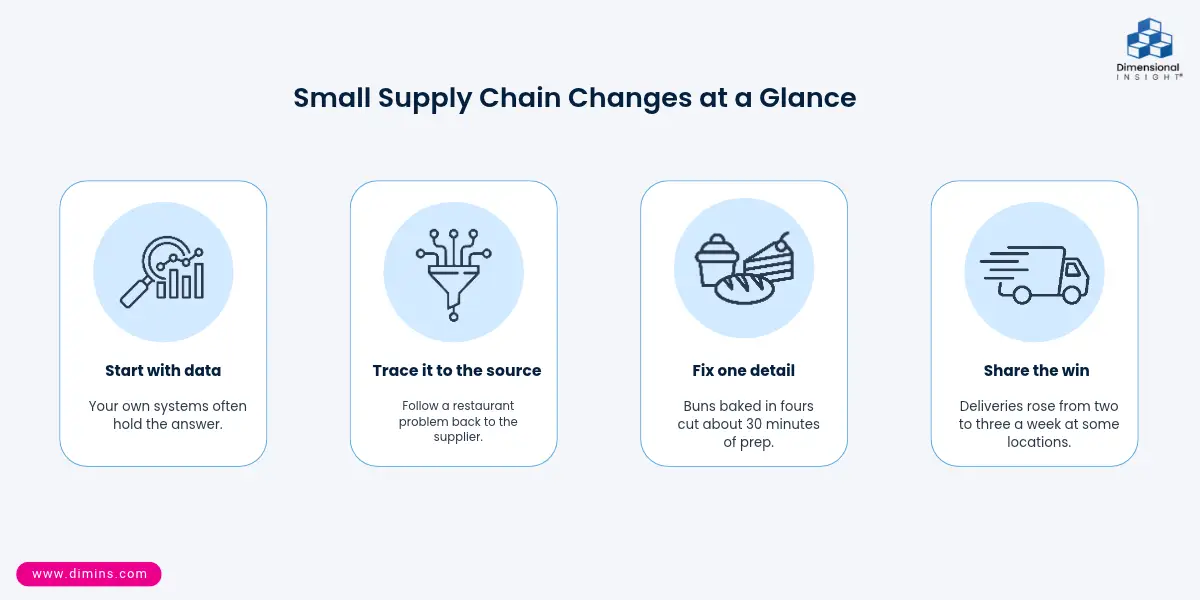
Even though supply chains can be expansive, some small decisions within them can have a big impact on the bottom line. Chili’s recently shifted its supply chain focus to the restaurant team member and guest experience to make some changes that have helped the organization’s growth and even improved its relationship with some of its suppliers.
Shifting supply chain strategy
Chili’s supply chain strategy used to be just focused on buying and cost reduction, but over the past few years they have analyzed problems within its restaurants and traced them back to the supplier level. Because the company has good relationships with its suppliers, they can work together to make changes that have a positive impact on the way their restaurants can run.
One example is the way buns for sliders were delivered. A prep cook would spend about a half-hour separating buns from a large sheet of 36 connected buns. The organization brought in the bakery supplier to see this in person, and the supplier agrees to a change where the buns were baked in groups of four, which took no prep time. Chili’s also debuted a new chicken sandwich early in 2026 which proved so popular that the organization increased the frequency of truck deliveries from two times a week to three at some of its locations.
How data can lead to decisions
None of these changes are made without considering the data. In order to make the kinds of decisions that are right for your organization, you need a comprehensive analytics solution. Once you identify the issue you are looking to address, you can zero in on the appropriate data that can put you on the right path towards a solution. In Chili’s case, the data was a difference-maker with the suppliers. The time saving and extra deliveries resulted in obvious benefits for Chili’s, and those changes had an impact on how the suppliers operated. Chili’s was able to show the suppliers, though, that because of their business relationship better business for Chili’s meant better business for the suppliers as well.
Some organizations use data simply to track a wide-ranging supply chain. Some solutions, such as Dimensional Insight’s Diver Platform, can bring together data from disparate sources to produce one single version of truth, so even if suppliers don’t use the same technology as one another, your bottom line can still include all of the necessary data. This information can help organizations track materials from one site to another, and it can help improve transparency across the enterprise. The information can be used to ensure you are using suppliers that align with your ESG values, or it can help to make sure you are keeping customers informed about how their products are made or shipped.
The common denominator in Chili’s ability to make the kinds of changes it needed to make to improve operations is a strong relationship with its suppliers. For that you need good people who can communicate well. Analytics can help with that communication, though. By presenting the data that can prove how changes can benefit both sides, organizations can make gains that make everyone happy.

- How Data Helps with the Smallest Supply Chain Adjustments - November 19, 2026
- How Data Drives Automotive Manufacturing - November 5, 2026
- Supply Chain Data Informs New York City’s Incentive Program - October 29, 2026