Companies across industries are always looking for ways they can make their organizations more sustainable. What many companies find is that their supply chains offer them opportunities to make improvements that can benefit the company both in terms of sustainability and in an overall business sense.
Sometimes companies release information about their sustainability plans when they submit it to regulators or industry experts. The calendar is different from organization to organization, though. Here’s a look at some of that timeline, how a few companies are working towards their goals through their supply chain, and the role data and analytics can play in helping to set and measure sustainability.
When do companies announce their sustainability initiatives?
Different companies take different approaches to their work around sustainability. Many have taken to aligning their work around ESG (environmental, social, and governance framework) to coincide with their financial calendars, since there is some overlap between the regulatory reporting in those two parts of the business world. Other companies aim for deadlines around regulatory requirements, or to have their data compared to that of competitors in industry rankings.
One regulatory piece is sharing sustainability initiatives with a wider audience, including stakeholders. This helps ensure accountability. Many companies take this step through stakeholder meetings, which can take place as often as once per quarter or as spread out as one per year. When companies have some element of success with their initiatives, though, they won’t wait to share what has happened. This is the most consistent reporting done by different organizations – sharing what is working well.
What kinds of work are companies doing?
Best Buy recently shared that all 29 of its supply chain facilities were “zero waste,” achieving a goal it set in 2021. The facilities diverted more than 90% of their waste from landfills by, among other initiatives, reusing pallets and materials like Styrofoam, which is broken down and condensed to cubes to make shipping more efficient, and then repurposed into new packaging, building materials, or other products.
A number of shipping companies have introduced electric vehicles into their delivery fleets to lower their carbon emissions. PepsiCo is transitioning to zero-emission vehicles but also using cleaner fuels and planning more efficient routing and driving with reduced weight.
What can analytics do to improve sustainability?
With big organizations, the numbers can get overwhelming. An analytics solution can take in all of the necessary data points, and then it can help quickly make sense of all of the numbers. When it comes to the supply chain, this can happen in a couple of ways.
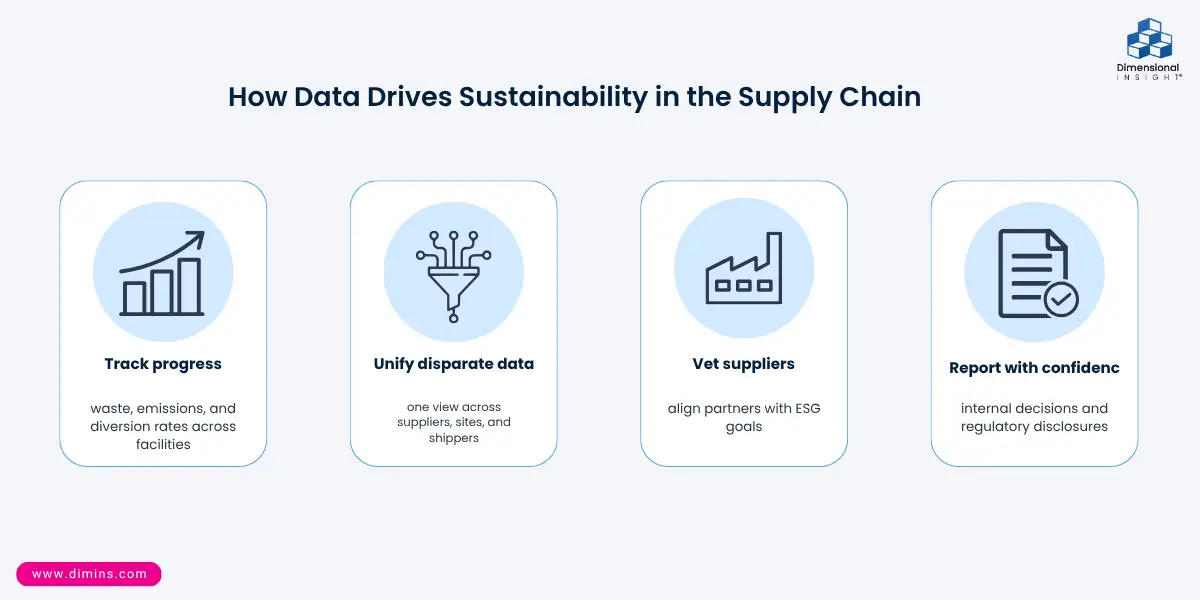
One way is by simply helping organizations track their progress. For a company like Best Buy, for example, there is the data around waste and making sure they can measure their improvement. It may not be hard to zero in on certain metrics and track them, but when the information is coming from 29 different facilities, the degree of difficulty increases. Organizations in the supply chain are often dealing with this type of situation, where facilities are spread out within an organization, or even involving facilities from different companies supplying them with materials. A comprehensive analytics solution can bring together data from disparate sources to ensure that all of the information is being interpreted the same way, allowing decision-makers to confidently draw conclusions about the work that is being done.
One issue many organizations face with sustainability goals when it comes to the supply chain is the many different companies it may have to work with along the way. Whether it’s shipping companies or factories or storage facilities, there are many instances where an organization may encounter another organization that doesn’t share its values around sustainability, or other ESG goals, for that matter. Walmart has made those relationships part of its sustainability strategy. It uses purchasing decisions to encourage suppliers to be more sustainable in their manufacturing, packaging, and other logistics. Walmart shares best practices with its partners as well. Any organization can take a similar step if it has the right analytics solution in place, knowing where it can draw the financial line with its suppliers to successfully encourage them to make sure their environmental goals align.
Regulatory compliance is also a big part of supply chain sustainability initiatives. The same analytics reports that are used to make better decisions within the organization can also be used for external reporting, including to governing bodies.
Data allows an organization to have more transparency across the supply chain. The right analytics solution brings together data from all aspects of an organization, allowing a full view of what is happening. That doesn’t just include finances and shipping rates, but also the aspects of the company that affect its carbon emissions. Analytics can help make sure your organization is doing everything it can to improve its work around sustainability, and a comprehensive solution can produce the reports that can help you share the success of those initiatives with the world.

- What Election Predictions Can Teach Us About Data Analytics - October 22, 2026
- Data can Lead the Way for Tuition Decisions - October 15, 2026
- Proper Data Governance Prevents Data Slop - October 8, 2026