Some of the most successful implementations of artificial intelligence (AI) have been in areas where it is clearly saving people time in tangible ways. One common example is in healthcare, where the technology is able to scan images and identify potential abnormalities more quickly than tired human eyes, helping doctors improve patient care.
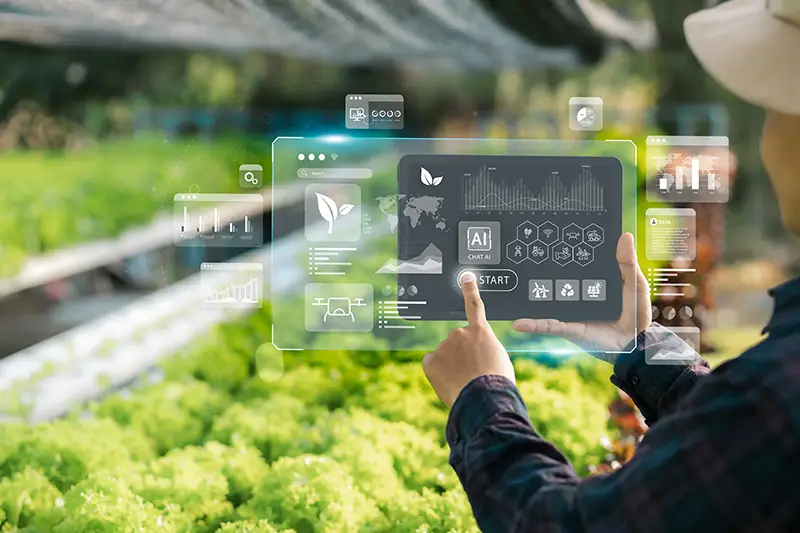
Another area where there have been significant time-saving advances is in farming. Data in the agricultural industry is nothing new — but AI tools can help farmers gather new information in new ways. Here’s a look at how some farmers are using AI tools, allowing them to focus some of their energies elsewhere, and what it could mean for farming data.
Can AI really milk a cow?
If you’ve ever heard stories about people working on a dairy farm, you know how time-consuming it is to milk the cows. Up before dawn to start the milking process, and then doing it again later after a long day of all of the other tasks involved in taking care of the animals. Now, machines can help with many of those tasks.
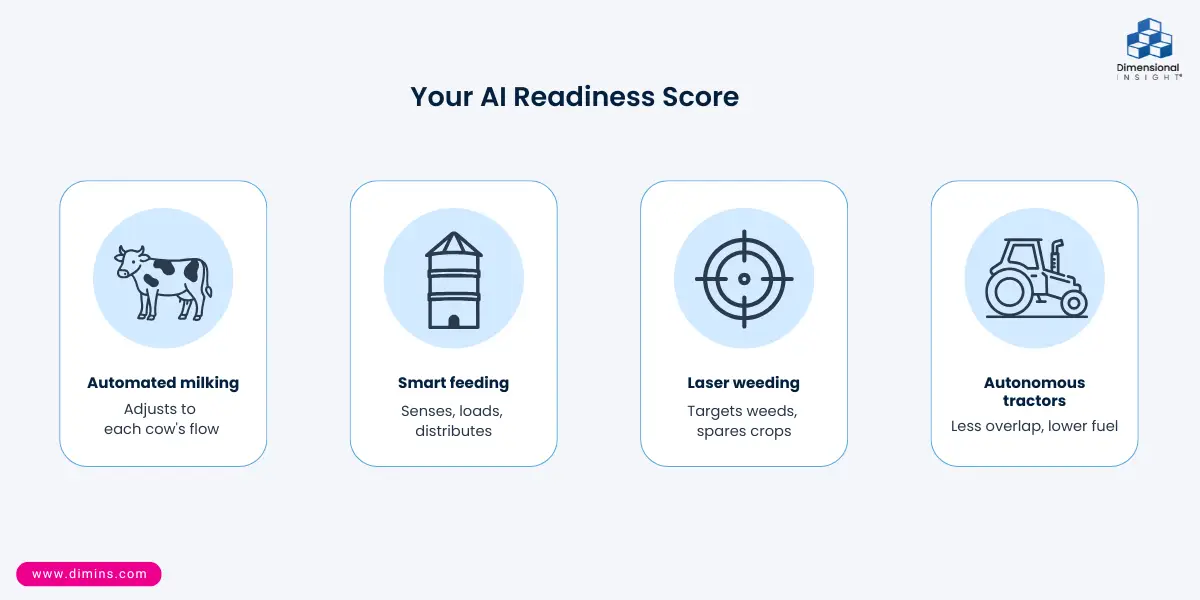
Automated milkers allow cows to walk in whenever they want to be milked, and AI allows them to adjust to each cow according to her milk flow, milk production, and teat location. Feeders have AI that can sense when feed is needed, go to the silo and load up, and then distribute the feed to the cows. It can also adjust to the cows’ eating patterns over time. All of this, obviously, saves time on the farm, allowing farmers to accomplish other tasks in less time than before.
Where else can AI impact a farm?
Just as it can help make farmers more efficient with their animal care, AI can make a difference when it comes to planted products as well. Rather than weed by hand or by applying chemicals to fields, some farmers use laser technology to attack weeds. The AI can identify the difference between a weed and a fruit or vegetable, using the lasers on the weeds only. This not only saves time for the workers, but it also can mean more crops, allowing the products to flourish without chemicals that might have partially stunted growth.
Autonomous tractors are a popular advancement as well. Savings can add up because the AI can recognize where in the field it has mowed, decreasing overlap compared to a human operator. This results in not just the task being completed more quickly, but also savings in fuel costs because the tractors don’t have to run as long.
How does data factor in?
For an independent small farm, the basic data they are gathering from these tools is enough. They know that milking the cows takes up less of their time, or that they are not spending money on herbicides. For big companies, the data adds up, and an analytics solution can help make sense of it all.
The range of efficiencies technology provides can be wide. The hours saved by automated milking are clearer than the percentage of mowing overlap by autonomous tractors versus human operators. A flexible analytics solution can take all of that data from different sources and bring it together to produce reports that show a total time savings. Flexibility is important, but so is scalability. You want a business intelligence product that can grow with your organization. You might start an analytics project to solve one problem, and then need to readjust to address something else. The right solution can meet all of your needs.
There’s plenty to consider on the management side, too. Some farmers stress that while the processes might be more automated, they are not necessarily taking the jobs of humans. The jobs have changed, though. Younger, more tech savvy people are becoming involved in farming, starting with operating the machinery or some other technological aspect, and then staying involved as they get more interested in the farming industry as well. Farmers also say there is always a need for people to oversee the automated work. Analytics can help measure all aspects of a business, from payrolls to scheduling.
It may not be milking cows or eliminating weeds, but every business has tasks that can be made more efficient, whether AI is involved or not. Business intelligence can help any organization in any industry find those opportunities and take advantage of them. It is important to identify what is important to your organization, and then make sure you have the right analytics solution to meet your needs.


- What Election Predictions Can Teach Us About Data Analytics - October 22, 2026
- Data can Lead the Way for Tuition Decisions - October 15, 2026
- Proper Data Governance Prevents Data Slop - October 8, 2026