There’s been a lot of discussion in the last few years about Gen Z and the impact they are having on changing consumer trends in the wine and spirits market. Now that Gen Z is getting older, it seems some of their habits are shifting. Here’s a look at what’s changing and what this means for the beverage alcohol industry moving forward.
What do the trends show about Gen Z drinking?
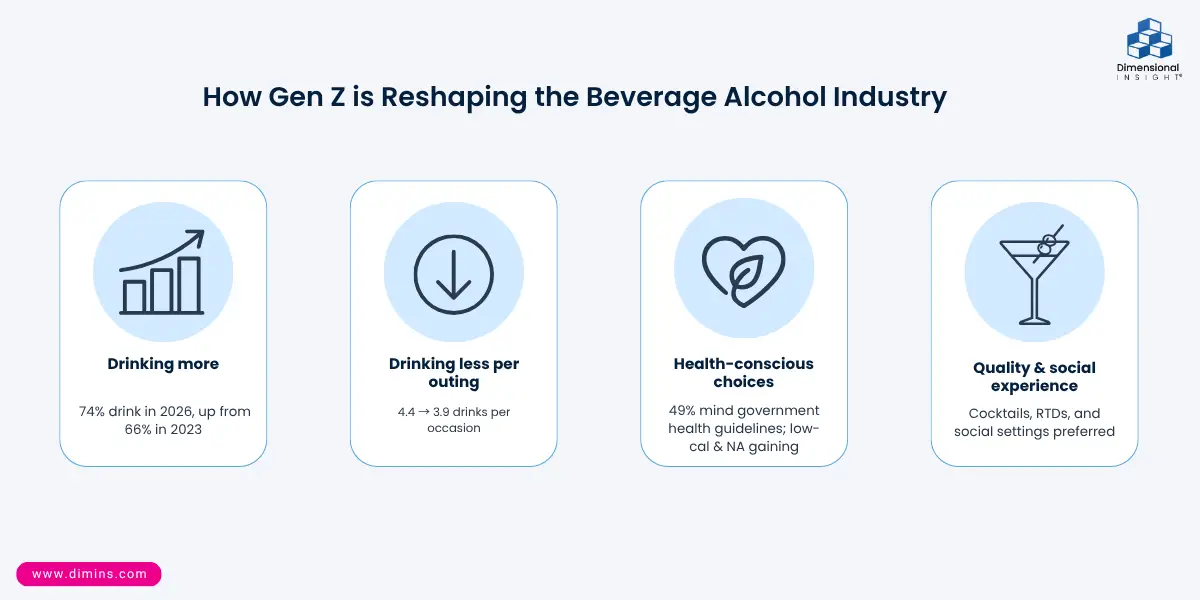
For years, Gen Z has maintained a reputation for drinking less than previous generations. However, recent data has shifted the conversation around Gen Z and alcohol. About 74% of Gen Z have participated in drinking in 2026, compared to 66% in 2023. This increase brings Gen Z much closer to the 76% drinking rate of all adults, suggesting that their alcohol consumption is beginning to align more with that of other generations.
Additionally, binge drinking rates among Gen Z are higher than millennial rates at that age, and baby boomers’ drinking rate is going down as Gen Z’s goes up. This suggests a generational shift, emphasizing that younger consumers are becoming increasingly important to the future of the beverage industry.
How do Gen Zers drink?
Despite the statistics above, Gen Z still consumes less alcohol per occasion. In fact, the average amount of drinks per outing dropped from 4.4 drinks to 3.9 drinks. This suggests a new trend of drinking with intention as opposed to drinking excessively. Gen Z also has a higher tendency to consume cocktails and drink more in a social setting, prioritizing quality and social experiences.
What has historically held Gen Z back in drinking?
The COVID-19 pandemic is one factor that has shaped Gen Z’s drinking behaviors. Much of Gen Z turned 21 during or shortly after lockdown, restricting the social experiences that they would have normally had.
Instead of going to parties or discovering new bars, everyone was stuck at home. As restrictions have been lifted, drinking in public settings has become more common for those who were previously denied that experience. This may explain the recent increase in Gen Z’s drinking participation, suggesting that their experience was simply delayed.
What about health trends?
Another reason why Gen Z may drink less than other generations is the influence of recent health trends and an obsession with body transformations caused by social media. Additionally, 49% of Gen Z drinkers reported being conscious of government health guidelines. They seek healthier, low-calorie drinks, which alcohol companies accommodate by offering light options and even non-alcoholic beverages. Companies are also more upfront at how each product is made and how it works, so consumers can understand how it fits into their lifestyle.
How does this data change things for the beverage industry?
Beverage alcohol companies have figured out how to effectively market to Gen Z:
- Bright, eye-catching packaging
- Ready-to-drink cocktails for convenience
- Appeal with familiar flavors (such as Surfside lemonade & iced tea, White Claw seltzers)
Additionally, companies have shifted their attitudes when it comes to promoting alcohol. While they do not necessarily market their beverages as “healthy,” they do highlight how they can fit into a healthier lifestyle, as opposed to the “party hard” approach used to target earlier generations.
Since these customer habits are constantly changing, it is important that companies use data to stay on top of these patterns and quickly recognize when attitudes are shifting. By understanding customer preferences and buyer trends, they can optimize their promotional strategies and adapt to a changing market.


- How Gen Z is Reshaping the Beverage Alcohol Industry - August 25, 2026
- How AI is Impacting Higher Education - August 20, 2026