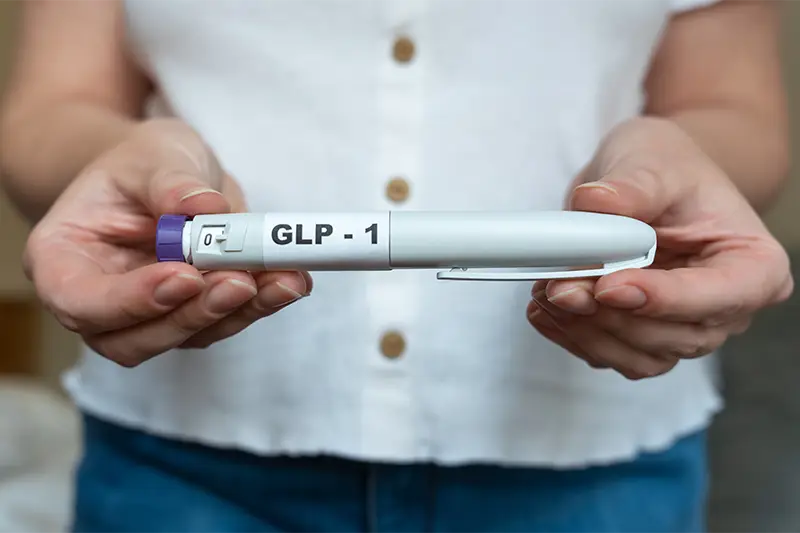
The next disruption in beverage alcohol isn’t coming from a new product—it’s coming from healthcare.
For years, the biggest shifts in beverage alcohol have been driven by consumer preference: premiumization, ready-to-drink cocktails, and more recently, non-alcoholic alternatives.
But a new force is emerging—and it’s fundamentally different. Drugs like Wegovy and Ozempic—part of a class known as GLP-1 receptor agonists—are beginning to influence not just how much people eat, but how much they drink. And for an industry already facing declining volumes, that matters.
Alcohol consumption was already declining. GLP-1s may accelerate it.
The beverage alcohol industry entered this moment with clear headwinds:
- U.S. alcohol volumes are declining across beer, wine, and spirits
- The percentage of Americans who drink has dropped from 62% in 2023 to 54% in 2025, according to Gallup
- Younger consumers are drinking less frequently and more selectively
GLP-1 drugs do not create these trends—but they may accelerate them.
What are GLP-1 drugs—and why do they affect alcohol?
GLP-1 drugs were originally developed to treat diabetes and obesity. They:
- Slow digestion
- Increase satiety
- Regulate blood sugar
Emerging research shows they also affect the brain’s reward system.
- GLP-1 therapies influence pathways tied to addiction and reward, according to the Endocrine Society
- A randomized clinical trial published in JAMA Psychiatry found semaglutide reduced alcohol cravings and consumption
Users commonly report:
- Reduced desire to drink
- Feeling full faster when drinking
- Less reward from alcohol
The data: early, but directionally consistent
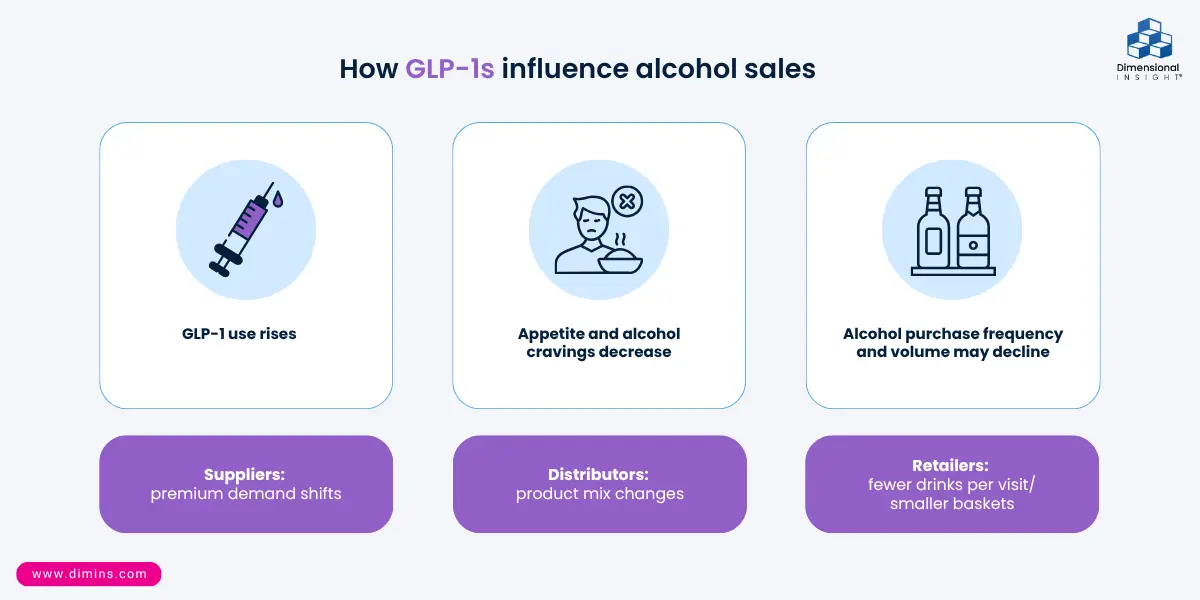
While long-term industry sales data is still developing, the early signals from clinical studies, observational research, and population polling all point in the same direction: GLP-1 use is associated with lower alcohol consumption for at least some users.
- In a randomized clinical trial published in JAMA Psychiatry, semaglutide reduced alcohol craving and improved some drinking outcomes versus placebo in adults with alcohol use disorder.
- Clinical and observational research has shown that GLP-1 medications are associated with reduced alcohol cravings, lower consumption, and decreased risk of alcohol-related disorders
- GLP-1 use is already widespread in the U.S. KFF reported in May 2024 that about 1 in 8 U.S. adults (12%) said they had taken a GLP-1 drug.
Why this matters more than it appears
- It affects high-value consumers: GLP-1 users tend to skew higher income and more health-conscious—groups that disproportionately drive premium alcohol sales.
- It compounds existing trends: GLP-1 adoption reinforces several existing shifts:
- Fewer social drinking occasions
- Growth in non-alcoholic alternatives
- Increased health awareness
- It changes behavior—not just preference: Most alcohol industry changes are substitution-based. GLP-1 drugs may reduce:
-
- Frequency of drinking
- Volume per occasion
- Desire to drink
What this means across the three-tier system
Suppliers
- Monitor changes in premium product demand
- Evaluate opportunities in lower-ABV and alternative beverages
Distributors
- Watch for shifts in order frequency and product mix
- Identify regional differences tied to demographics and health trends
Retailers
- On-premise: fewer drinks per visit
- Off-premise: smaller baskets and substitution effects
Why this is a data problem
If you’re in beverage alcohol, this is a trend you won’t see in your dashboard—but you will see it in your data.
GLP-1 impact will appear as small, distributed changes:
- Slight declines in purchase frequency
- Shifts in product mix
- Changes in customer behavior over time
These signals require exploratory, multi-dimensional analysis to detect early. Dimensional Insight products are designed for this type of analysis—helping teams identify what is changing, where it’s happening, and which customers are driving it.
The bottom line
GLP-1 drugs are not the sole reason alcohol consumption is declining. But they may be one of the most important emerging factors. The industry isn’t just facing changing preferences—it’s facing changing physiology.
FAQs
Are GLP-1 drugs the main reason alcohol sales are declining?
No. Declines are driven by multiple factors, including health trends, fewer social occasions, and generational shifts. GLP-1 drugs are an emerging contributor.
How do GLP-1 drugs reduce alcohol consumption?
They affect appetite and the brain’s reward system, reducing cravings and the perceived reward from drinking.
How widespread is GLP-1 usage in the U.S.?
Estimates suggest roughly 10–15% of U.S. adults have tried or are using GLP-1 medications, based on KFF data.
Will this have a long-term impact on the alcohol industry?
It is still early, but adoption is growing quickly and early data suggests a measurable behavioral impact.

- 10 Questions Every Healthcare Analytics RFP Should Ask - July 28, 2026
- We Have Epic. Why Are We Still Arguing About Our Numbers? - June 23, 2026
- Is Your Data AI-Ready? A Beverage Alcohol Assessment Guide - June 16, 2026