
The automotive supply chain may not orbit around Detroit the way it once did, but the city, or at least the state of Michigan, still plays a big role in the industry. According to the Detroit Regional Chamber of Commerce, 98 of the top 100 automotive suppliers to North America have a presence in Michigan, with 65 headquartered there. The automotive and mobility industry contributes $304 billion annually to Michigan’s economy, and Michigan is tops in the nation when it comes to automotive manufacturing jobs as well as exporting transportation equipment.
Michigan is taking steps to ensure that it stays competitive in the global market. In this week’s blog we’ll take a look at how they’re doing that, as well as a different type of automotive supply chain, and the role data plays in all of it.
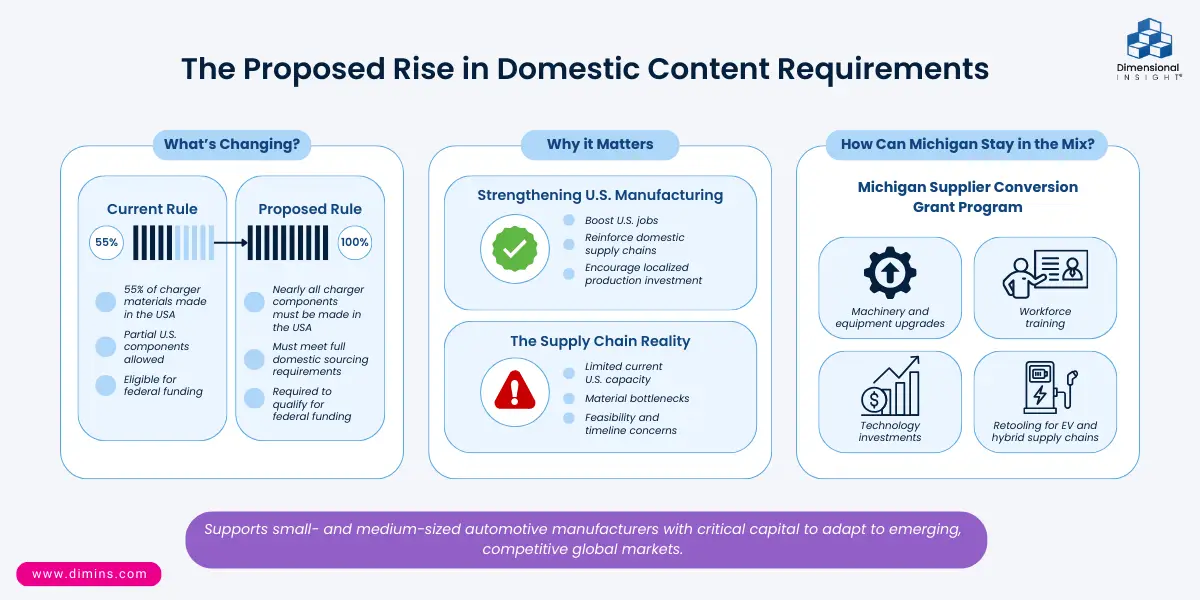
How can Michigan stay in the mix?
Michigan is offering funds through the Michigan Supplier Conversion Grant Program to small- and medium-sized automotive manufacturers. The money provides the “critical capital needed to adapt to emerging, competitive global markets,” allowing companies to retool their facilities to enter qualified vehicle supply chains such as hybrids. The money can be used for updates to such things as machinery and equipment, training to support qualified retooling projects, and technology investment.
The news comes as the federal government proposes its own changes to the domestic automotive supply chain. The Federal Highway Administration proposed raising the domestic content requirement from 55% to 100% for EV chargers. The Transportation Secretary says the change would strengthen domestic manufacturing and create jobs, but critics say the stricter requirements, which would require nearly all charger materials – including iron and steel – to be made in U.S. facilities in order to receive federal funding, are not realistic due to the current limitations of the U.S. supply chain.
How is F1 connected to the supply chain?
Meanwhile, a very different type of automotive supply chain starts revving up around the world every spring. Formula 1 racing takes place in dozens of countries over about nine months. Getting everyone and everything where they need to be for each race requires careful planning and understanding of global transportation.
The logistics decisions that need to be made are more than just planning shipping routes. Organizations need to decide how they want to ship their materials, whether that’s on land, over water, or by air, and they’re balancing cost and speed as well as sustainability measures with every decision. All of these factors must come together in tight windows so that teams can be ready not just for race day, but also for practice sessions and qualifying rounds leading up to race day.
Why does analytics matter to the automotive supply chain?
What seem like two very different types of automotive supply chains have more in common than you might initially think. Michigan is making economic decisions based on the realities of the automotive industry and supply chain, using the data to figure out how to boost production and jobs. In this case, it’s by encouraging companies to shift their focus to hybrid production. Every step of the F1 process involves the same type of data that any company needs to ensure their supply chains are running smoothly.
Information about shipping routes, anticipating disruptions, weighing cost and sustainability, and working with strict deadlines isn’t unique to Formula 1. Companies are making these types of supply chain decisions every day, whether that’s moving finished products or tracking the materials they need to bring together to create for example, a car or an EV charger. The right analytics solution can provide real-time updates with access to key metrics critical to operations, allowing decisions to be made proactively instead of reactively.
Scalability is important as well. If your organization relied on supply chain data for gasoline-powered automobiles and then becomes an organization in the hybrid market, as some Michigan companies are poised to do, a flexible solution can make that adjustment with you, rather than a solution where you’re starting from scratch when your company evolves.
There is more overlap ahead between the U.S. automotive supply chain and F1. In 2026 General Motors debuts its Cadillac Formula 1 Team, bringing a team with most of its operations in America to the international sport. For now they are using engines made overseas, but the plan is to make all components domestically over the next couple of years. There is no doubt analytics will factor in to the decisions that team makes moving around the world for races as well as making sure it has the parts it needs when it needs them as it builds its engines.


- How Analytics Helps Combat Employee Burnout - September 10, 2026
- Data is Key to Make Sustainability Progress in the Supply Chain - September 8, 2026
- Healthcare Organizations Need Flexible Analytics to Adjust to Changes - September 3, 2026