The higher education industry does not enter 2026 on a high note. Coming off a year in which the Education Department was dismantled and policy has been turned on its head, colleges and universities are facing unprecedented difficulties on top of what was already a challenging time for the industry.
The current climate is forcing institutions of higher education to get creative, especially when it comes to fundraising. Here’s a little bit about the challenges that lie ahead, and how analytics can help organizations make necessary changes when the circumstances call for it.
What changed last year?
The federal government took a number of steps in 2025 to try to change the behaviors of colleges and universities. In addition to withholding funds from hundreds of schools, the government specifically targeted certain universities that it felt should pay millions of dollars for various violations.
Schools were asked to sign a compact in which they agreed to certain terms on conditions including tuition, admissions, hiring, and free speech. Signing the agreement could lead to preferential access to federal funding, but many major universities rejected the compact.
How can schools adjust?
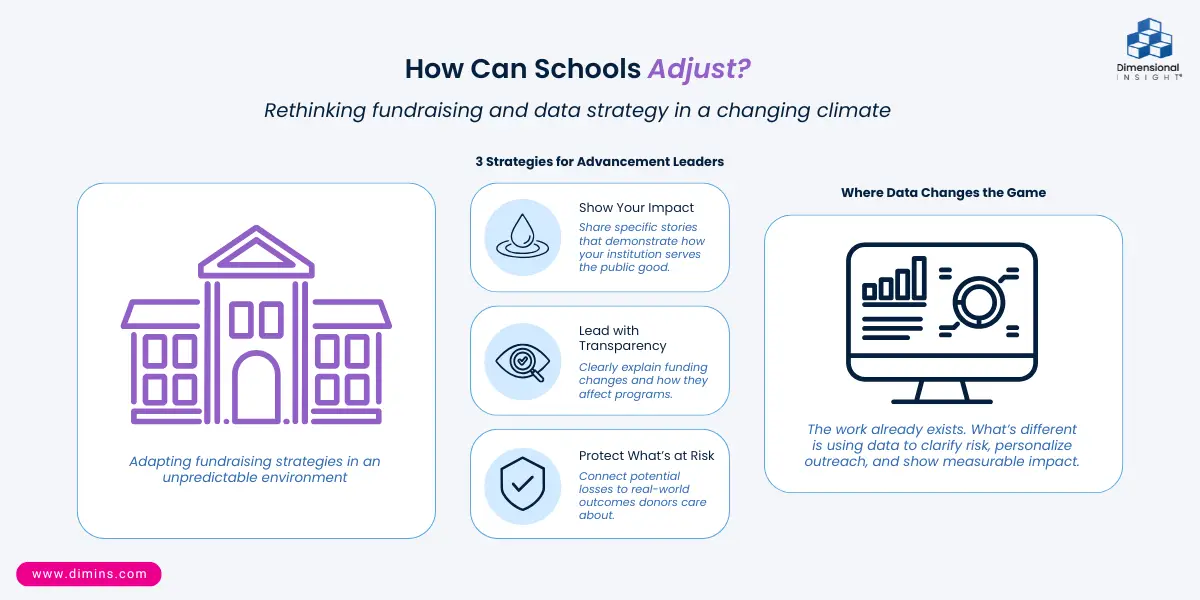
Without being able to rely on federal funding, colleges and universities are turning their attention elsewhere for fundraising opportunities. Many have donor networks to which they can appeal. The higher education research firm EAB recently published 3 strategies advancement leaders can use to help navigate an unpredictable fundraising environment:
- Focus on the impact your institution has on the world around it: Share specific stories about how your school serves the public good.
- Speak with honesty about what’s happening: There’s no need to get political, but it is helpful to state facts. Donors are probably aware there have been cuts, but they might not understand how those cuts impact programming. It’s your job to tell them.
- Build support for the work that’s at risk: Similarly, connecting all of the dots above – what could be lost and how that can affect the school’s impact on the world around it – can help donors understand the role their contribution plays in the important work the school is doing.
This work is already being done at most schools in one way or another. What is different is how to specifically use the work to navigate the current climate. In addition to changing their pitch strategy, schools can also change the way they use data.
How can analytics help?
Many schools rely on analytics for the work they do around fundraising. They can use the data to sort alumni or donors by region or giving habits, and tailor appeals or updates and success stories based on a donor’s interests or an alum’s profile. They also understand the information they are gathering from students during their time in school all builds towards the profile that they will have of that student once they graduate and are in a position to give back.
Just like any other organization using technology, schools are always looking for ways to improve the work they do with data. In this case, they are examining new ways to measure their impact. Businesses don’t make important decisions without examining the data. Colleges and universities are trying to provide the data that shows investing in a school is a good decision for a local community. In one example, a research and policy database company is working to measure the impact of higher education by tracking when a university’s research is included in state and federal policy documents, allowing officials within the industry to show exact instances where schools are providing value to local and national communities.
That kind of continuing work requires a flexible analytics solution that can help schools address the issues they are working to solve today as well as the challenges that may lie ahead. The higher education industry is volatile in a unique way. Schools each have their individual concerns to worry about, from facilities to programs to faculty, but they also have to worry about such things as national policy that are out of their control. Some issues can be anticipated, but some are unpredictable. Analytics can help institutions be prepared in both cases.
One of the anticipated issues has to do with the number of students. The class of 2025 marked the enrollment cliff that college officials have had their eye on for some time. Fewer students are expected to be attending college in the coming years, and schools will need to make an adjustment. Administrators may not have all of the answers for what lies ahead, but with analytics they can at least be prepared with the correct tools to help find those answers.


- Tracking Shipping Price Changes with Analytics - October 1, 2026
- AI: The Good, The Bad (and Scary), and the Analytics - September 24, 2026
- Analytics Drives Creative Solutions to Utilities Industry Challenges - September 17, 2026