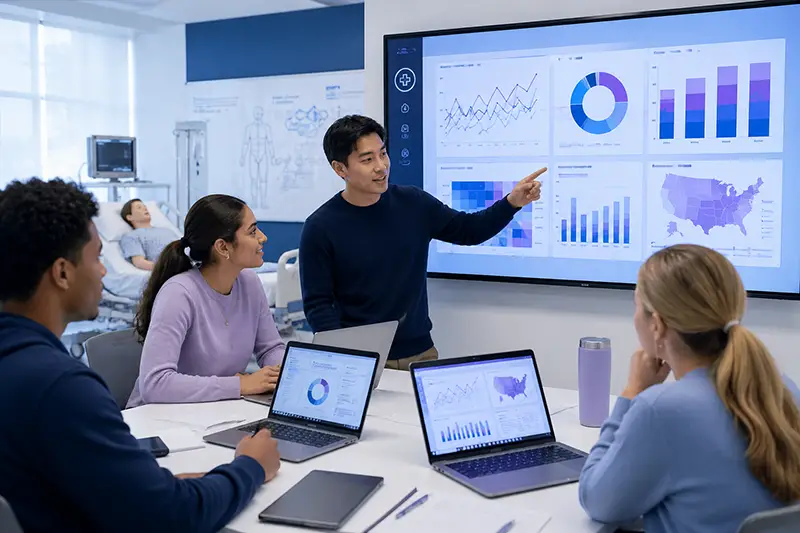
One of the ways colleges and universities use data is to determine if they could be offering more classes that might draw prospective students. Using data well can lead to good data for the school – by setting students up for success with classes that help them land good jobs when they graduate, the schools have better numbers to tout for incoming students looking for work in the same area upon graduation.
School decision-makers need analytics to make these decisions. Financial data is also involved because it could involve hiring new faculty or possibly even new buildings. In some cases, the analytics tools might be used for the students. Here is some of what schools need to consider when preparing students for the workforce, and the role data plays throughout the process.
Health informatics degrees
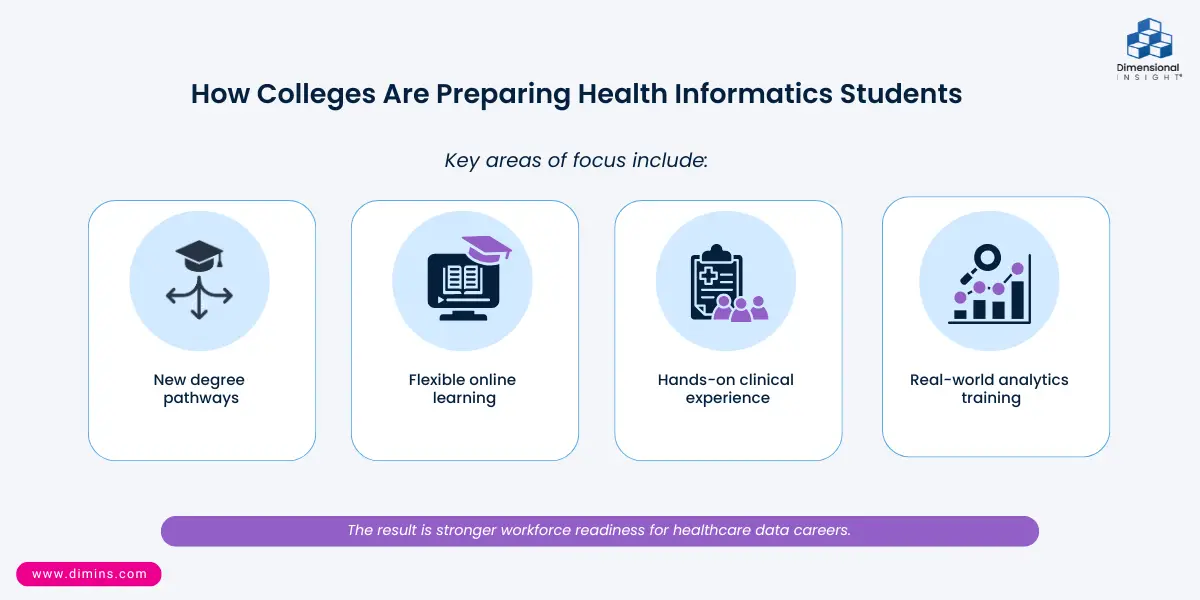
The University of Central Florida offers one example of how to set students up for success in the healthcare field. The university offers cutting-edge simulation centers to provide students in their health-related programs realistic experience that helps prepare them for clinical work upon graduation. The school has expanded its offerings to include a Bachelor of Science degree in Health Informatics, offering the same kind of career readiness for a growing job market.
The Bureau of Labor Statistics projects the health informatics job market will experience 15% growth by 2034. The school says the goal of the bachelor’s program is to equip students to use data in a way that will improve healthcare outcomes and clinical treatments. It offers a more technical approach to data than UCF’s previously existing master’s in healthcare informatics and bachelor’s in health information management programs.
Growing in popularity
UCF is not the only school taking these steps. The University of Pittsburgh debuted a Bachelor of Science in Health Informatics program in 2026. As the school says, it reflects “the University’s commitment to expanding access to world-class learning that meets the needs of today’s students and tomorrow’s workforce.” Manhattan University expanded its graduate degree offerings this year with the Master of Science in Healthcare Informatics.
All of these programs have a few things in common. One is that they offer hands-on opportunities with data. At Manhattan that means partnering with real-world healthcare organizations to develop applied, data-driven solutions. At Pitt it involves a clinical internship. The other aspect is that the programs are all offered online, allowing flexibility for students following a nontraditional path to a degree.
Finding the best analytics tool
Part of the real-world experience that is so important to get students thinking about is the kind of analytics tools they will be using in the workforce. Many healthcare facilities are undergoing technological transformations that will make the jobs of data analysts easier. Colleges and universities need to make sure they are preparing students for not just the work they will be doing in this area, but also by using the same tools they will be encountering.
Students should be learning about how a comprehensive analytics solution can provide decision-makers with critical information that can lead to better patient outcomes. But they should also be learning about how the more flexible a solution is, the more an organization can do with it, because it can bring together data from different departments and potentially different systems to produce one single version of truth.
Students should be using the most cutting-edge technology to produce reports. They should be introduced to a comprehensive analytics platform that reflects the governed, enterprise environments they’ll encounter in healthcare organizations—while also having access to more intuitive tools that let them move quickly from data to insight. Instead of relying on complex formulas or multi-step processes, students should be able to group, explore, and understand data in just a few steps, building both confidence and fluency in real-world analysis.
Colleges and universities are recognizing that times are changing and they need to adjust. By providing more advanced class and degree options to students, they are responding to data and taking steps to improve the quality of education those students are receiving. Schools need to take that same approach with the technology they are using in those classes. The right analytics solution can provide them with the real-world technology students will see upon graduation, and make sure they are experienced using the most cutting-edge tools.

- What Election Predictions Can Teach Us About Data Analytics - October 22, 2026
- Data can Lead the Way for Tuition Decisions - October 15, 2026
- Proper Data Governance Prevents Data Slop - October 8, 2026