
It’s a trope as a movie line, but there are certain times it is true in real life: If you want to get something done, sometimes you have to do it yourself. That can often be the case with data – you know what data you have, and you know the final result you need, but there might not be a way to bring it all together…yet.
In certain cases, when you don’t have what you need, you can create it yourself. And chances are, there are others who are looking for that same information. That’s what happened at Brown University and a data tracker they created in 2024. Let’s take a closer look.
Outbreak Tracker
Researchers at the Pandemic Center at the Brown University School of Public Health created the Tracking Report to monitor how and where diseases are spreading in the United States and around the world. As they discovered the information was useful to more and more people, they began releasing the information in a weekly newsletter.
About 10,000 subscribers now rely on the information in the newsletter for information about the spread of infectious diseases such as measles, influenza, COVID-19, cholera, and others. It calls to mind the work done by Johns Hopkins University, which tracked COVID cases through the pandemic, right up until they stopped collecting data in March 2023.
Collecting the data
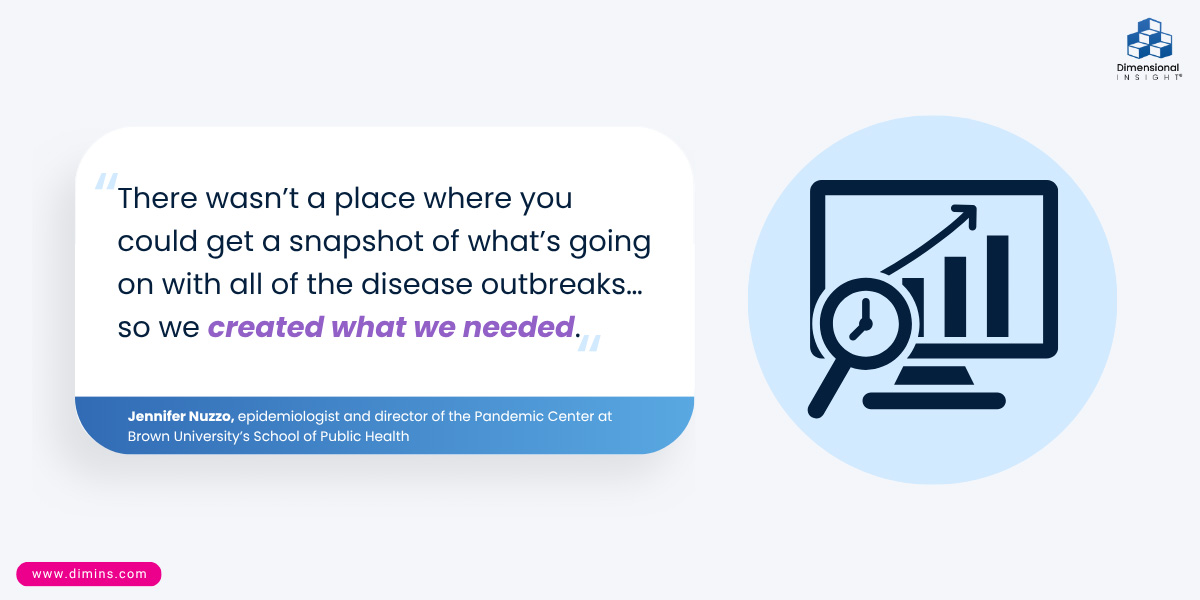
The Tracking Report came about because the information the researchers were looking for wasn’t already easily available. “There wasn’t a place where you could get a snapshot of what’s going on with all of the disease outbreaks that are happening not just in the United States but also globally, and that have the potential to spread to other countries,” said Jennifer Nuzzo, an epidemiologist and director of the Pandemic Center at Brown University’s School of Public Health. “So we created what we needed. As it turns out, lots of other people needed it, too.”
The researchers discovered that many people, from journalists to physicians to policy makers, depend on the weekly newsletter’s information, especially since cuts in the federal government have resulted in a lack of such information. Nuzzo says the report includes data from a number of sources, and instead of relying solely on data from federal health agencies, they get information directly from state health departments. For example, they report the number of hospitalizations and deaths due to measles, with information about the ages and immunization statuses of measles patients obtained from state health departments.
Flexible solution
There are any number of ways to go about using analytics in the healthcare industry. One way to ensure public health is to identify, prepare for, and respond to infectious diseases, and the Brown University researchers created this tool in order to do that, studying when outbreaks happen and how to quickly react. That can then extend to predicting when an outbreak might happen, and going further, how to prevent outbreaks from occurring in the first place.
If there’s data out there that you need to make decisions, but you are unsure of how to make it work for you, a flexible solution is a must. Like the Tracking Report, data might come from a variety of different sources. The analytics solution that can help turn that data into actionable information needs to be able to work with all of the different sources it may encounter to produce the type of report that could become relied upon in the same way Brown’s Tracking Report has become so trusted.
Sometimes seeing what other organizations are doing with data can help spark ideas in your own organization. Not everyone is going to explore data that involves tracking infectious diseases across the globe. But similar work following a similar approach to data could lead to a discovery within your own healthcare system that can help improve care for your patients.
Organizations have many options when it comes to making sense of their data. One option is to make the most of the information you already have. Another, as the researchers at Brown showed, is to create your own path by finding the appropriate data that will help address an issue you are concerned about. The work could result in that data being trusted by an even wider network, broadening the impact that analytics can have on the healthcare industry.


- Using Public Data with Your Analytics - April 9, 2026
- An Election Year Puts the Spotlight on the Energy Industry - April 2, 2026
- How Data Helps Improve Accessibility - March 26, 2026