Organizations in the supply chain industry know that to make their way through these turbulent times they need to rely on data. The question many of them might be asking, though, is how can data predict anything during such unpredictable times?
Supply Chain Brain recently published the results of a study called “Resilience in Uncertainty: Understanding the Impact of Tariffs, Geopolitical Risk, and Lack of Data Quality in the Supply Chain.” Respondents to the survey said they recognize the value of maintaining high quality data to drive decision-making and item-level traceability to improve visibility, but not many are deploying those capabilities. And about 75% of respondents say they are significantly impacted by geopolitical or socioeconomic disruption, but only about 50% feel well-equipped to manage it. Here are some of the key insights into the supply chain industry that the discussion around the survey results provided.
A new normal
The biggest takeaway, according to industry expert Bart De Muynck, is that geopolitical risk is the new normal. Organizations need to be prepared to act differently in accordance with the time we are living in, and they need to rely on data to navigate the risk. Organizations can’t treat data as a nice option to have – it is something they need.
Everything in the supply chain is immediate right now – information is available the instant it is needed. That’s a benefit for companies in the industry, but it also magnifies risk. Geopolitical situations have immediate results as well, which increases their impact on the industry.
Data quality is paramount
It’s not enough to have data – organizations need to ensure they don’t have bad data. With all of the data available to companies in the supply chain, it is a real challenge to ensure that data quality is being maintained. De Muynck calls data quality the ‘unsung hero of resilience’ because of the role data can play in navigating disruption – but only if it is good data.
Traceability
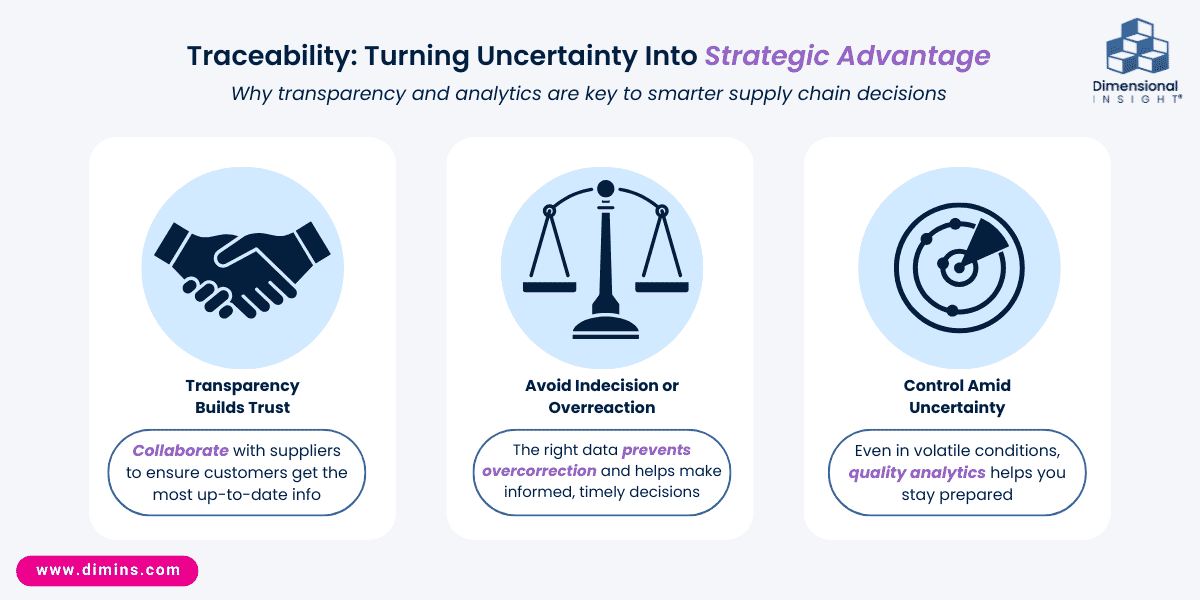
Being transparent with your supply chain is important for several reasons, but, in particular, it can help improve an organization’s relationship with its customers. Collaboration with suppliers can not only ensure that customers are getting the most up-to-date information – it can help organizations make sure they have the best data available to make decisions and be as efficient as possible.
Customers are at the heart of all this work. As always, they have high expectations no matter what challenges in the supply chain an organization is facing. Those organizations need to be as prepared as possible to handle issues in a way that does not end up affecting the customers.
Many companies get caught in a moment of indecision when there is an unfolding situation such as the current tariffs ordeal. They wait to see what will happen before they act. Other companies might go too far in the other direction and do too much when they might not have to.
Analytics can help prevent those moments of indecision or overreaction. Working with the right analytics solution provides the quality data that can help an organization make the kinds of decisions that can keep them one step in front of whatever disruptions lie ahead.
The supply chain industry is going through a period of uncertainty and risk. That is never a situation in which organizations like to find themselves. With quality data, though, companies can take back some semblance of control. It can be hard to prepare for a situation that is unpredictable…but data and analytics can keep you from being unprepared for these challenges.


- What Election Predictions Can Teach Us About Data Analytics - October 22, 2026
- Data can Lead the Way for Tuition Decisions - October 15, 2026
- Proper Data Governance Prevents Data Slop - October 8, 2026