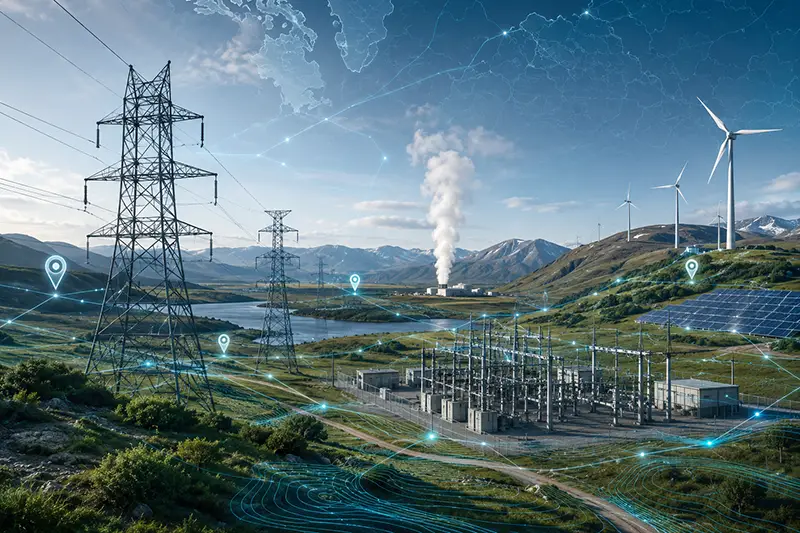
There is a lot of change in the utilities industry. Increased demand for electricity, the need for cleaner energy, and an aging infrastructure are all factors coming together at the same time to force the industry to evolve.
Organizations are looking for clean energy solutions. A couple of possibilities that have been talked about for a long time are now closer to reality, and geographic data is going to play a key role in how to find them. Let’s take a look.
Why is there a need for more energy?
The rise of artificial intelligence is having a huge impact on the utilities industry. The data centers that fuel AI use incredible amounts of energy, taxing an already strained, aging infrastructure. Utilities companies are working to find more ways to make everyone happy, from residential customers to technology companies, all without doing great harm to the environment.
Clean energy is one solution. Solar and wind power are ways the industry is trying to address those needs, but there are some limitations on those renewable resources. It is expensive to store the energy produced when it is windy or sunny, and storage is a necessity since that kind of electricity can’t be produced 24 hours a day. Industry experts are working on viable alternatives.
What are the alternatives for clean energy?
At the moment, geothermal energy provides just 0.4% of electricity in the United States. Geothermal plants have only been located where underground hot water reservoirs are close to the surface of the earth. In the U.S., that is only in parts of California, Nevada, and Hawaii. (Iceland is a world leader in this area.) Now, though, the technology exists to dig deeper than ever before to capture the heat beneath the earth and bring that energy to more places.
Similarly, organizations are trying to figure out how best to capture large quantities of hydrogen, which emits only water vapor when burned. Experts dream of using clean hydrogen instead of fossil fuels in the types of industries where it has been difficult to find usable alternatives to oil, gas, and coal. It is hard, for example, to provide energy to a huge container ship by solar-powered batteries. Hydrogen is the most abundant element in the universe, and natural hydrogen reservoirs exist, but finding them has proven difficult. Some companies are trying to create reactions below ground that can produce large-enough quantities of hydrogen that can be turned into electricity above ground.
In both cases, location matters. While it’s easy enough to find the type of heat that can provide geothermal energy anywhere if you dig deep enough, it is important to consider location in relation to the energy grid in order to make it practical. Hydrogen is more complicated. In addition to the fact that hydrogen reservoirs can be difficult to find, hydrogen is also difficult to transport and store, so it needs to be used close to where it is produced or found. Location data factors into all of this, and it is one of a number of data elements for utilities organizations to consider in their work.
How do companies in the utilities industry use data?
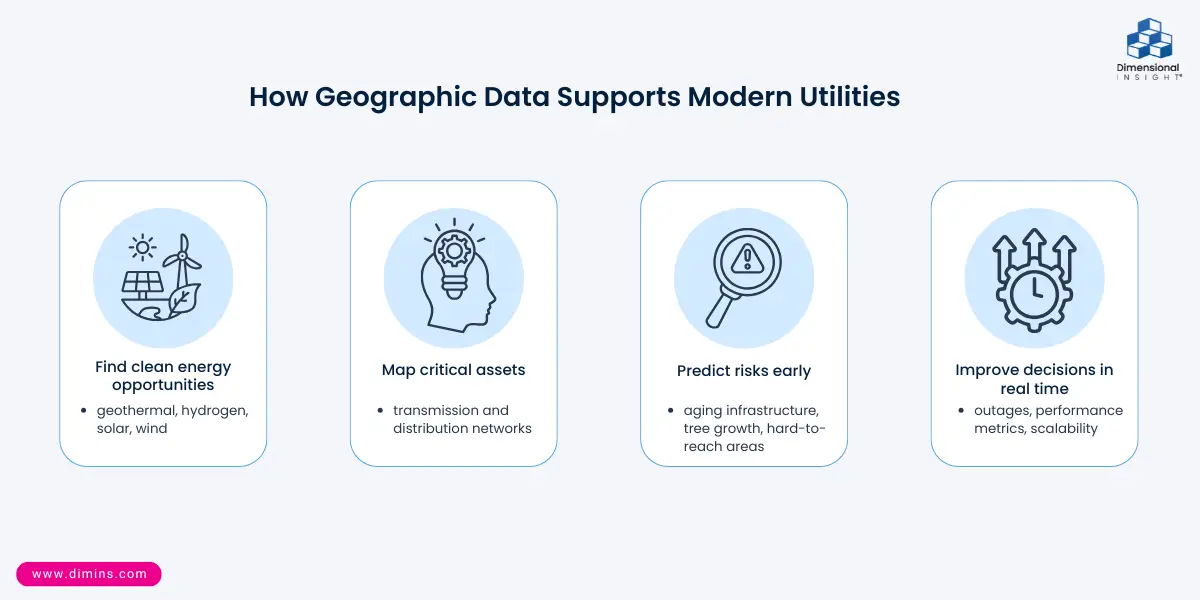
Utilities organizations use geographic data for other reasons, too. Organizations map their assets along transmission and distribution networks, and use that information as they assess possible expansion needs or any potential risks. Asset mapping and other geographical data is used for preventative maintenance. Organizations gather data that can help them predict problem areas, whether that is related to aging infrastructure or by sending out drones to areas where humans have a hard time reaching to look at tree growth or other natural threats to infrastructure.
Data is not limited to geography, of course. There are regulatory requirements and all kinds of customer data points that organizations in the utilities industry need to monitor in order to ensure success. To do that, companies need an analytics solution that can bring together data from all of these different sources to form one single version of truth that can help executives make the best decisions for the company as well as its customers.
The right utilities analytics solution can do all of that while providing real-time visibility into performance metrics, allowing workers to respond immediately to outages or changing conditions. Flexibility and scalability allow the solution to grow with your business, able to adjust along with the ever-changing standards of the utilities industry.
The future of the utilities industry could look very different than it does right now. What has felt hypothetical for a long time is closer to becoming reality. One of the potential roadblocks is that the companies looking to capture hydrogen are very protective of their data when it comes to where they are focusing their efforts. Progress might not be made until that information is shared so that everyone can work together to more quickly find a solution to the issues within the industry. Clean hydrogen and geothermal energy might be closer than ever before, and data, with the right analytics solution helping stakeholders understand it, might be the key to harnessing it.

- What Election Predictions Can Teach Us About Data Analytics - October 22, 2026
- Data can Lead the Way for Tuition Decisions - October 15, 2026
- Proper Data Governance Prevents Data Slop - October 8, 2026