A lot of companies turn to data for immediate results. They need an analytics solution that can track information in real-time and allows them to make business decisions that will have an immediate impact on their bottom line.
In the wine industry, though, there are some data points that move much more slowly. It can take years of tracking for vineyards to gather data on some of the grapes they are growing. Here’s an example of the kind of long-term data-gathering that can happen in the winemaking industry, and how technology can help speed up the process in certain ways.
What kind of data do vineyards gather?
Over the years technology has become a bigger and bigger part of the winemaking process. Some vineyards choose to stick to tried-and-true methods that have been used for centuries. As more technology has become available and made more data points accessible, though, more and more winemakers have incorporated those modern elements into their processes.
Drones and scanners allow winemakers to monitor every inch of a vineyard more often than ever before. There are countless data points that can be gathered from the field, from soil quality to chlorophyll levels to moisture amounts. Problems can be detected and addressed immediately, or if for some reason an anomaly positively impacts a grape, that can be noted so it can be replicated in the future. Similar data is gathered throughout the fermentation process and when the juice is moved to barrels to ensure the best quality wine.
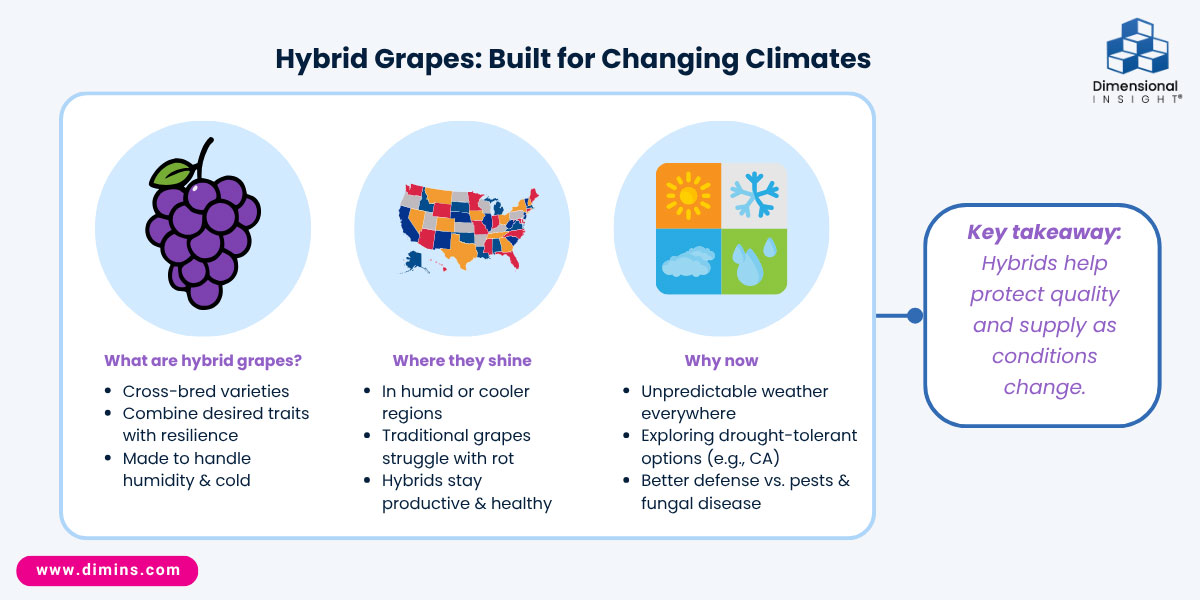
What are hybrid grapes?
Certain weather conditions, such as those in California, are ideal for certain types of grapes. Grapes grown in Europe can also be grown on the west coast. In cooler or more humid weather, such as that on the east coast or in the Midwest, winemakers have struggled with growing those same grapes. That has led to the development of hybrid grapes, which can have some of the same traits as the European grapes, but be more resistant to the rot that can occur in humid weather or be more able to withstand colder temperatures.
It can take years, though, for this data to unfold. Some vineyards and researchers estimate 15 years before certain types of grapes can be available. The work is important, though, because what started as an adjustment for certain types of consistent weather conditions might become a necessity for unpredictable weather everywhere. Winemakers in California are exploring hybrid grapes that might be able to withstand droughts. As climate change impacts the winemaking industry, there is more of a need for grapes that can withstand extreme weather or other effects such as insect infestations or fungal diseases.
How are data and analytics used?
The data gathered in the creation of the product just scratches the surface of how analytics can be used in the wine and spirits industry. Organizations can continue to gather information that can impact decision-making for every step until the product reaches a customer, whether that’s in a bottle delivered to someone’s doorstep or in a stem glass at a restaurant or bar.
It is important for wine companies to find the right analytics solution that suits their business needs. Analytics can provide real-time updates on product movement, depletions, and select KPIs. Sales teams can get those updates anywhere and at any time through mobile dashboards, and receive immediate notifications that can lead to improved program performance. The most up-to-date information about trends and what products are or are not selling in certain areas could be the key to staying ahead of the competition.
Any advantage helps in an industry like wine and spirits. Customers have their choice of an ever-increasing array of products, and if you’re not on top of your information they could easily move on. Some of the data in the industry can be given time to develop, like the years it takes to grow the perfect grape. When it comes to decision-making, though, information needs to be more instantaneous. For that, you need an analytics solution that can work fast and produce results.


- How Data Impacts the Automotive Supply Chain - February 18, 2026
- AI is Available to the Masses. What Does That Mean for Business Intelligence? - February 10, 2026
- How Data Helps Utilities Limit the Damage from Winter Storms - February 5, 2026