Analytics is imperative in the supply chain industry. There are so many moving parts, and organizations can only control so much. They need every possible tool to help them navigate both the expected and the unexpected.
Supply chain analytics can do more than just make a difference to those organizations trying to stay ahead. The data can lead to other changes that can not only benefit a business, but even quality of life elsewhere. Here’s an example of a data-driven decision in New York City, and how analytics factors in.
What is NYC OHD?
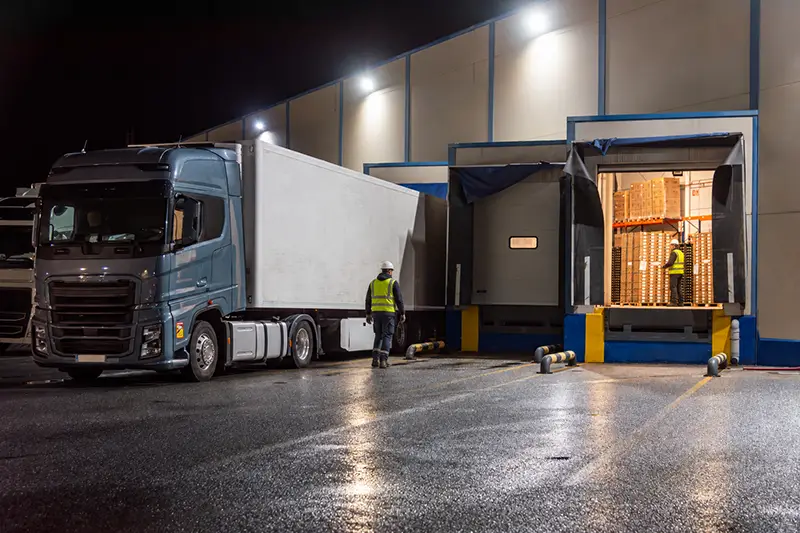
New York City recently announced financial incentives for businesses to shift truck deliveries to off-peak hours. It’s the latest expansion of the off-hour delivery (OHD) program, which was implemented on a pilot basis in 2009 and became permanent in 2010. About 1,100 locations in New York City use the off-hour delivery program, and the city hopes to reach 5,000 locations by 2040, moving 62,000 trucks away from peak hours.
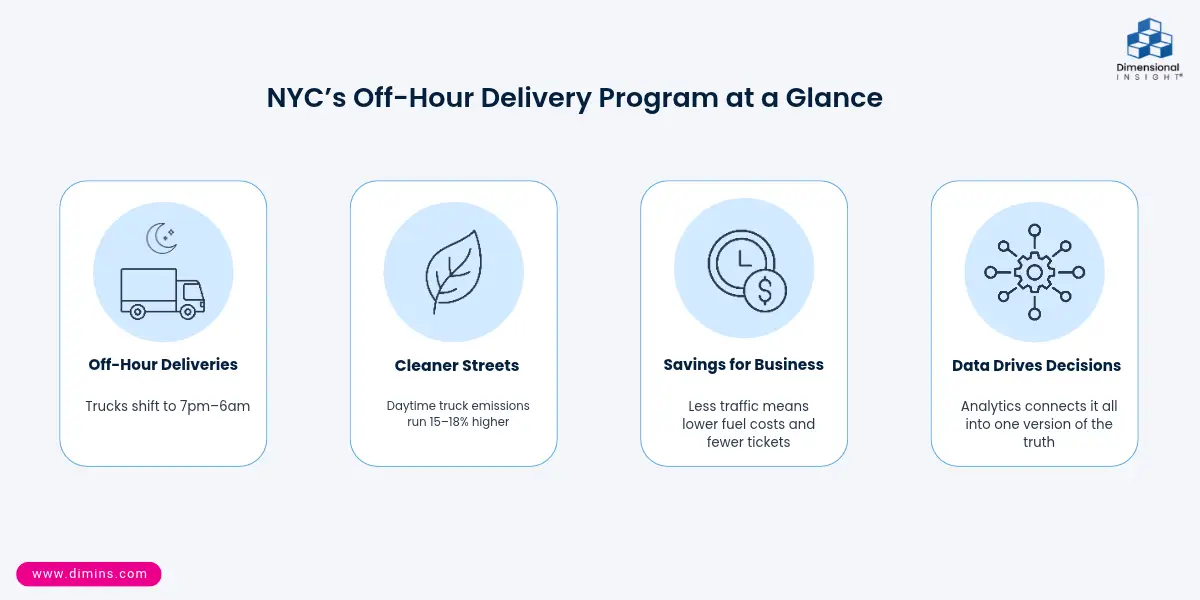
For the first phase of the OHD incentive program, up to 14 businesses will be given more than a half million dollars to shift their deliveries to between 7pm and 6am. The remaining funds will be distributed to participating businesses in the second phase. The money comes from the city’s congestion pricing program.
What does the data tell us?
Decisions like this are not made without considering all of the data involved. In this case, New York City’s leaders are looking at how to better meet the demands of e-commerce while fighting congestion across the five boroughs. The positives of the OHD program are:
- It’s better for the environment. The New York City Department of Transportation says trucks represent about 8-12% of all New York City traffic, with 80% of commercial activity occurring in the daytime. data centers are a hot-button topic this November, both as a ballot question and in terms of candidates who either do or don’t support the facilities in a number of states across the country.The department cites a 2023 study that shows truck emissions are 15-18% greater during daytime hours than during the night when congestion is reduced.
- It’s better for businesses. For the companies receiving shipments, there are fewer delays. Business owners don’t have to interrupt their day to receive a delivery. Even if they are open during off-peak hours, they can count on more reliable delivery times. For shipping companies, OHD can save a lot of money. With fewer cars on the street and more space to park, fuel costs go down and there are fewer parking tickets or traffic violations. Less traffic means fewer delays and more efficient deliveries.
- Better for the community. All of this adds up to a better experience for the community as well. Trucks don’t have to double-park or take up other parking spots or bus lanes on the busy streets. With fewer trucks on the streets during the daytime, it also makes for a safer environment for pedestrians.
The funding is intended to help make the overnight deliveries attainable for businesses. Some of the tools and strategies OHD promotes are quieter equipment for nighttime deliveries, such as quiet gates, electric dollies, and backup alarms. Other costs could include security upgrades to enable unattended deliveries, or the addition of security cameras.
The role of analytics
Every city and every organization have the data to make decisions such as this one. The key, though, is being able to make sense of the data and turn it into information upon which you can act.
The right analytics solution can help your organization find efficiencies in the supply chain no matter how widespread your operation might be. One potential obstacle in the supply chain is that data can be coming from many different sources with many different suppliers throughout the enterprise. A comprehensive solution such as Dimensional Insight’s Diver Platform can bring all of that data together to produce one single version of the truth so that all reports represent the entire supply chain and decisions can be made from there.
When it comes to New York City’s OHD program, shipping companies must decide whether the benefits the city touts really do apply to them. Analytics can help them look at the bigger picture, and how their own last-mile data lines up with what the city is trying to promote.
New York is not stopping with off-hour deliveries. It is trying to reduce its reliance on trucks and shift deliveries into the city by waterways, then by electric vehicles or bikes and handcarts. Either way, it’s a look at how supply chain data can be used to come up with creative solutions. Any organization can do the same thing to help improve their bottom line or find answers to the questions that pop up in day-to-day business. In order to find those answers, though, you need the right data, and the right analytics solution to help make sense of it all.


- Supply Chain Data Informs New York City’s Incentive Program - October 29, 2026
- What Election Predictions Can Teach Us About Data Analytics - October 22, 2026
- Data can Lead the Way for Tuition Decisions - October 15, 2026