
After the Cleveland Cavaliers lost Game 3 of the Eastern Conference Finals to the New York Knicks to fall behind 3-0 in the best-of-seven-game series, their coach got a lot of attention for a comment he made about analytics. Kenny Atkinson referred to the team’s “expected wins,” which projects winners based on the data, and said, “I think analytically…we’ve won two out of three.”
While Atkinson’s comment was likely made with tongue in cheek, it does shed some light on what analytics can – and can’t – do. Of course, all that matters in the NBA, especially when it comes to the playoffs, is what’s on the scoreboard. That result saw the Knicks advance to the NBA Finals, where they will face the San Antonio Spurs. But if you’re keeping score in a different way, Atkinson’s comment wasn’t even the only attention-getting analytics quote from the series. Let’s take a look at the analytics discussion, and how it can translate from the NBA to your organization.
What role does analytics play in the NBA?
Baseball gets all the attention for Moneyball, but basketball had an analytics revolution of its own. Some strategy can be boiled down to the increased prevalence of the three-point shot, with the reasoning being, why settle for just two points when three is more points? But basketball teams employ entire analytics departments that have the ability to break down, for example, the ability of a player to execute a pick-and-roll, or to score in the paint. It is hard to know exactly what some teams measure analytically because the information is so proprietary that they keep it a secret lest they lose their edge over a rival team.
A lamppost to a drunk person
Which brings us to Josh Hart, a Knicks player who has been a big part of their recent success on the court, but may not look like the type of player on paper that is capable of doing so. Hart was compared by his coach to a similar player, Andre Iguodala, who contributed to four championships with the Golden State Warriors. While appreciating the comparison, Hart gave his take on analytics, using a quote he credited to his college coach, Jay Wright.
“I’m never a huge analytics guy,” he said. “At a certain point, they’re a lamppost to a drunk person. You can lean on them, but it won’t get you home. So at a certain point you have to have a good feel for the game.” When sports experts talk about a player’s ‘unmeasurables,’ they are basically referring, in less colorful language, to what Hart is addressing here.
What does any of this have to do with my organization?
The bottom line with analytics is that it’s how you apply the data to real life that matters. Unless you’re playing a computer game, the data can only do so much by itself. It is meant to provide the kind of context that can help an organization make impactful decisions, but only if it is used correctly by those decision-makers.
A basketball team is most successful when the five players on the court are working together, not as five individuals doing their own thing. When it comes to analytics, there are many different parts of an organization working in their own areas, producing their own information. It is only when all of that information is brought together that an organization can get the best results from its data.
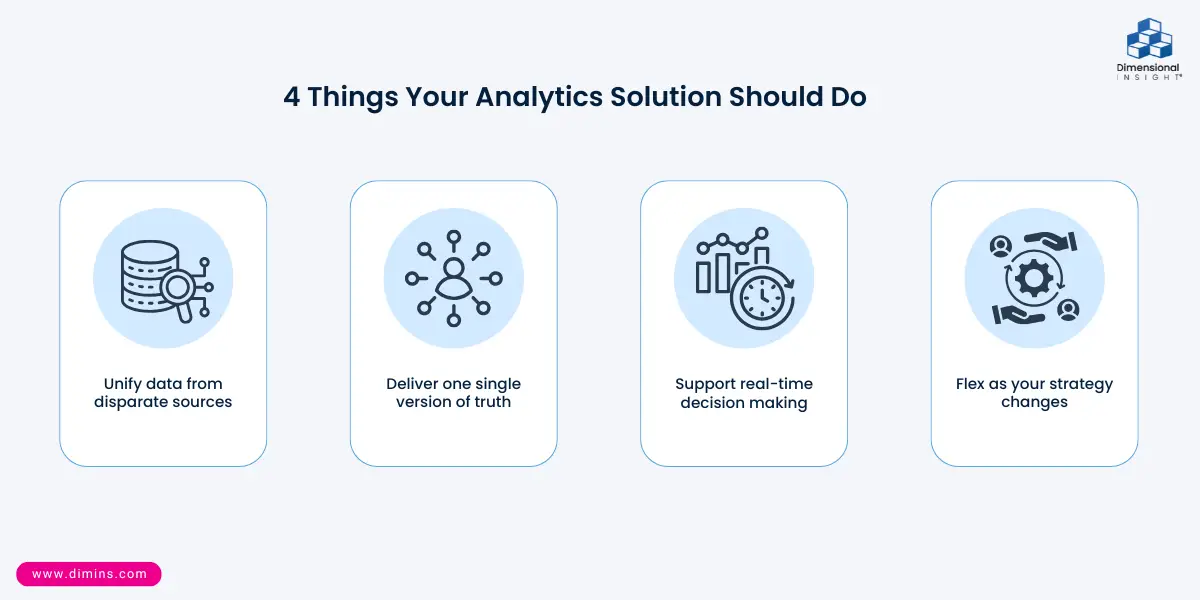
In order to do so, they need an analytics solution that can handle information from disparate sources, uniting the data so that decision-makers are looking at one single version of truth reflecting the entire enterprise. When the opponent adjusts in basketball, the players on the court need to be able to employ a different strategy in response on either offense or defense. An analytics solution needs to be flexible in a similar way, able to shift to what an organization needs if it makes changes to its strategy based on how the industry changes, or on how customers are responding.
And while organizations may keep their metrics a secret from other teams, it is important that everyone within the organization is on the same page. Transparency builds trust, and the more people feel connected to the data, the more invested they will be in the technology helping them access it.
The NBA’s Eastern Conference Finals may not have been the likeliest platform for an analytics discussion, but perhaps we shouldn’t be surprised. No organization – whether it’s an NBA team or a healthcare facility – can operate without a solid understanding of their data. It’s one thing to win the analytics game on paper. It’s an entirely different thing to see that success translate into the real world. In order for organizations to capitalize on the gains the data can provide, they need the best business intelligence solution that can meet their needs.

- Tracking Shipping Price Changes with Analytics - October 1, 2026
- AI: The Good, The Bad (and Scary), and the Analytics - September 24, 2026
- Analytics Drives Creative Solutions to Utilities Industry Challenges - September 17, 2026