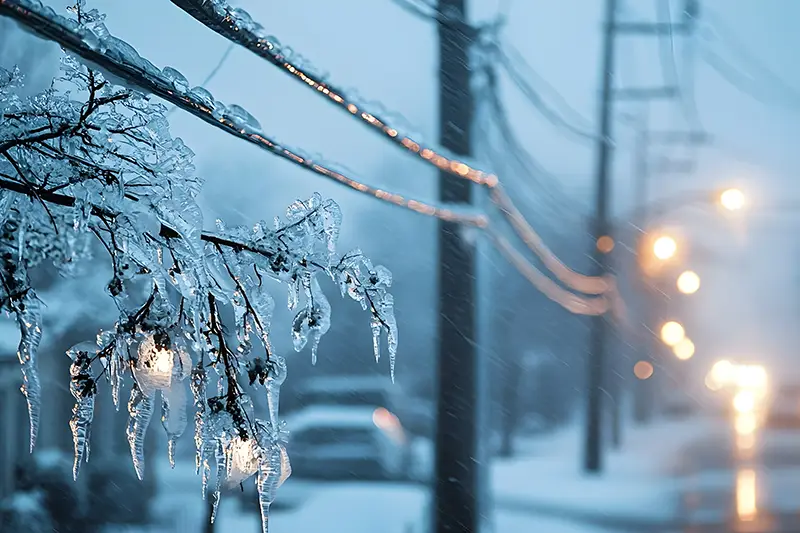
The utilities industry is one in which if everything runs smoothly, customers don’t spend a lot of time thinking about it. If something goes wrong, though, or if there is even a threat of something going wrong, it is something people don’t forget about.
Such was the case in 2021, when an ice storm in Texas led to a grid failure that left customers without power for days. Another storm in 2022 froze natural gas pipelines, leading to the failure of about a quarter of the natural gas plants on the grid managed by PJM, which services 13 states and the District of Columbia.
That history had everyone keeping an eye on the utilities industry as Winter Storm Fern hit much of the country at the end of January. Here’s how some utility companies prepared for the storm, and the role data plays when snow and ice threaten to knock out power.
What problems can a winter storm cause for utilities?
The falling snow is not the immediate problem for power companies that other weather events, like hurricanes, can be. Energy experts warned of the days following the winter storm, when snow and ice weighed down on tree branches and power lines, leading them to break and damage electrical equipment.
Utility companies are already dealing with higher demand than ever, with increasing electricity needs from data centers that power artificial intelligence. In some cases, they are balancing that with an aging grid, as power plants are taken off line. Winter Storm Fern was the first weather event to challenge power companies since the strain of the data centers entered the picture. In order to manage usage during the storm, PJM called on some customers to cut back on electricity use, and data centers were forced to run on backup generators to ease the strain on the grid.

Preparing as much as possible
Every decision utility companies are making in a storm like Fern involves data. Organizations don’t want to guess at what might happen – they want to act with certainty about what is most likely to happen. Before the storm, an energy consulting firm predicted that the main grid in Texas would hit peak demand between 5am and 8am Monday morning following the storm. For PJM’s grid, that number would happen between 7am and 10am on Tuesday. Knowing that gives companies a time frame for when they might need to more closely monitor usage
Even with all of the planning, outages are inevitable. Hundreds of thousands of residents and businesses across the southern part of the country lost electricity from the storm. Utilities were prepared to respond, though. Power companies across the country worked to coordinate responses to the storm, deploying more than 65,000 workers to address the outages.
How can data make a difference in the utilities industry?
Utility companies, especially those in Texas, have spent the years since 2021’s deadly storm gathering information about how they can do better. One solution has been adding large battery storage systems and solar farms in order to provide themselves with sufficient reserves to meet the anticipated demand. The data extends beyond supply and demand, though.
Many utilities gather information about every step of their process, from customer service to maintenance operations. One example is the use of drones to examine areas that are hard for humans to reach. In a winter storm type of situation, organizations can use this information to figure out any areas that are likely to present problems if branches were to break or there was the potential for ice to impact infrastructure in another way, and they can adjust staffing in anticipation.
Organizations using this type of information need an analytics solution that can integrate data from a number of sources to produce one singular version of the truth. Then decision-makers can confidently use the data to act, knowing that everyone across the organization is seeing the same information.
When the time comes to look back at the response to Winter Storm Fern it will likely show that utility companies fell short of perfect. Any loss of power would probably earn that justification, let alone power to hundreds of thousands of people. But companies have their own metrics to help them understand their performance, whether that’s simply comparing the outages to previous events, or measuring how long it took to respond to outages and restore power to those customers. Companies are continually gathering data, and a storm like this one gives them an opportunity to improve performance the next time. The organizations best set up to do so are the ones with an analytics solution that can help them best take advantage of all of the data they are compiling.

- How Data Impacts the Automotive Supply Chain - February 18, 2026
- AI is Available to the Masses. What Does That Mean for Business Intelligence? - February 10, 2026
- How Data Helps Utilities Limit the Damage from Winter Storms - February 5, 2026