
It may seem obvious that in order for analytics to thrive, there needs to be access to data. But in many instances, organizations have trouble with that step. They might be able to bring some, but not all, data into their reporting process, or they might struggle with how to distribute the information to those who need it.
Data accessibility can be the difference between a business just barely surviving and one that is thriving. And in the healthcare industry, that difference can make a huge impact on patient care. It can save lives. Here’s how healthcare organizations can make sure they have the most access to their data and how to use it effectively.
What kinds of data do organizations need access to?
Medical facilities have all kinds of data. There is the patient data that lets providers know about someone’s medical history and how to best treat them. There’s also data about patient care that can inform treatment of other patients. A lot of that is the same information that can be used when it comes time to report about public health or to meet other standards governed by regulatory agencies.
For hospitals and other healthcare facilities there is also a lot of data that focuses on the financial aspects that come with managing a business. Data about operational costs, such as medical supplies, as well as billing and claims are all part of a healthcare organization’s use of financial data.
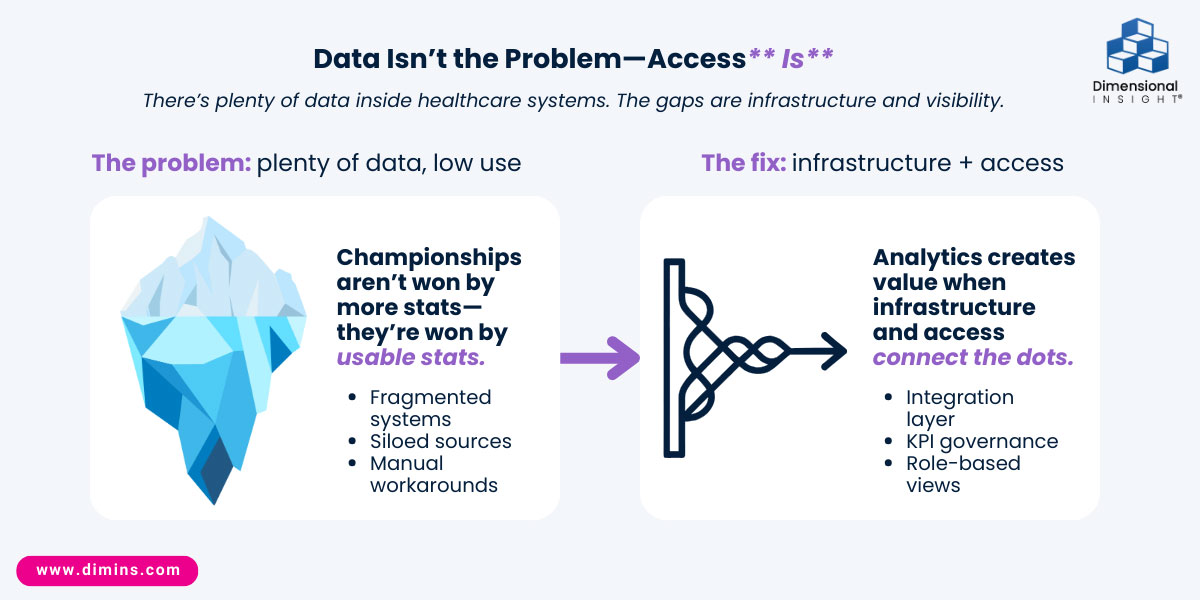
Why aren’t healthcare facilities using data?
The problem is not the data itself – there is plenty of it within an organization. Some places are only scratching the surface of what they can do with that data. Part of this problem is infrastructure – organizations don’t have the technology in place that allows them to pull together the necessary data that can help them make important decisions. Another issue is who actually can see the data. Even if everything goes smoothly and information is processed in a way that allows the organization to find inefficiencies, it doesn’t mean much if it doesn’t get into the hands of the people who need it. That can be medical professionals, but it can also be patients who could benefit from access to certain data.
What can healthcare organizations do to improve data accessibility?
The best analytics solutions are designed to make sure everyone is getting all of the information they need at all times. Some organizations need an analytics solution that gives them results where they can take action and improve processes. Some organizations need more than that. One of the biggest obstacles to data accessibility is a lack of integration. The best analytics solutions can bring together data from disparate systems and produce a single version of the truth. The solution can also be customized to fit an organization’s unique needs, depending on what systems are being used throughout the facility and whether changes will need to be made in the future.
As a result, users can be confident that the data they are looking at is trustworthy. That’s also a result of everyone working together to set goals about what they would benefit from knowing and how they would like that information presented to them. A technology solution with access to the cloud can make the data available at all times to everyone who needs it. In the healthcare industry, when every second matters, that is extra important. A medical professional should not have to wait to get the information they need in the moment when treating a patient.
There are a number of benefits that come from increased data accessibility in the world of healthcare. For patients, there is better transparency. Allowing them to see what they want to see about their own health or about the performance of a particular facility provides a sense of comfort to many patients who otherwise might not feel they are in control of their healthcare. For providers, it allows easier collaboration between medical professionals, giving them more opportunities to share information when necessary. And for organizations as a whole, it can help provide the necessary information that can lead to difference-making decisions which can help save an organization time and money, all while improving patient care.