
Colleges and universities use vast amounts of data to make sure they are operating at peak efficiency. There are numbers focused on maintaining a steady flow of applicants and keeping admissions up. Once students are in, there are numbers that focus on retention and the data that is important to keeping those students on campus. That just scratches the surface of the many different aspects of institutions where data plays a role.
A new study suggests that using the data within your institution is just one step. Another area that might make a difference is how the data is shared more widely. Let’s take a look at the report and how the way you present the data to others can sometimes be just as powerful as using the data on your own.
Where does this report come from?
It is a complex time for the higher education industry. Many smaller institutions have faced tough decisions forcing them to either merge with larger schools or to shut down. In addition to the political divisiveness targeting colleges and universities, there are concerns about cost, access, and institutional priorities. As the civic education nonprofit Campus and Community Solutions puts it in its report, “Trust in Higher Education Starts Local,” these concerns have “created a gap between what people expect and what they believe they see.”
The report identifies that most Americans are not huge supporters or opponents of higher education – about half of those surveyed fall into a “movable middle” of people who believe in the promise of college but want to see it evolve. The right data can possibly help turn some of those people into advocates rather than skeptics.
How can data help improve trust in higher education?
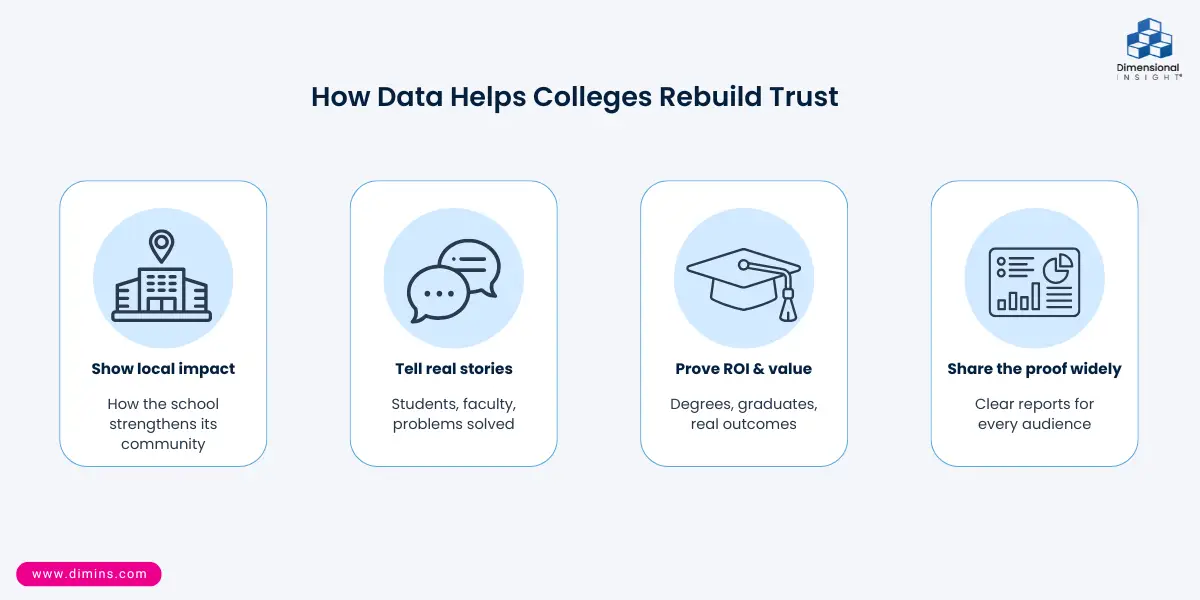
One of the big takeaways of the report is that colleges are actually doing much of the work that people expect from them. What they may not be doing effectively is sharing that work with the public, especially in the areas directly surrounding the school. The report finds that people trust the college down the road more than the idea of higher education in the abstract.
The report also found there is a 30-point gap between how important people rate trust-building qualities and how well they think colleges deliver on them. As the report puts it, “Higher ed doesn’t have a PR problem. It has a proof problem.” The report suggests that in order to shift the narrative in favor of higher education, they need to show how the institution has an impact locally and how it prepares students to improve their communities; tell the stories of students, faculty, and campuses solving real problems; and acknowledge concerns about cost and value while presenting clear connections between a degree and real-world opportunity.
How can an analytics solution help?
This is where data can make a difference. In fact, colleges and universities that already have some kind of data infrastructure in place have seen how data is making a difference in these areas. It is how this information is reported and shared that can make a difference to the wider community.
The most important part of reports like this is that they provide institutions with a guidebook for which data matters. That’s an important part of the analytics process. When colleges are recruiting students, they are zeroing in on what matters to those applicants, whether that’s campus life or class offerings. That helps them focus in on the data that they need to produce results. In this case, data like ROI is information colleges already have, as they track graduates and gather information about what they are doing with their degrees. They already use that information to attract applicants. It’s just a matter of shifting how they use that data, targeting a wider audience than just prospective students, including the community that is looking to see those kinds of results.
In order to manage all of this, colleges and universities need a flexible analytics solution. The right solution can produce comprehensive reports that makes the data clear to any audience, providing the ‘proof’ some people need that higher education matters and can be trusted. The solution must be able to bring together data from the wide array of sources that can be found on a college campus so that the reports can address any issue that may come up that can help the case of higher education.
In a time where it seems like so many people are losing faith in higher education, it is no small matter that the report finds many Americans still believe in the promise of the industry. In order to convince everyone that colleges are delivering on that promise, it is important for institutions to have the right data. The right analytics solution can help them take advantage of that data and make it presentable to the audiences who need to see it.

- What Election Predictions Can Teach Us About Data Analytics - October 22, 2026
- Data can Lead the Way for Tuition Decisions - October 15, 2026
- Proper Data Governance Prevents Data Slop - October 8, 2026