
What’s New on the Website
Press coverage
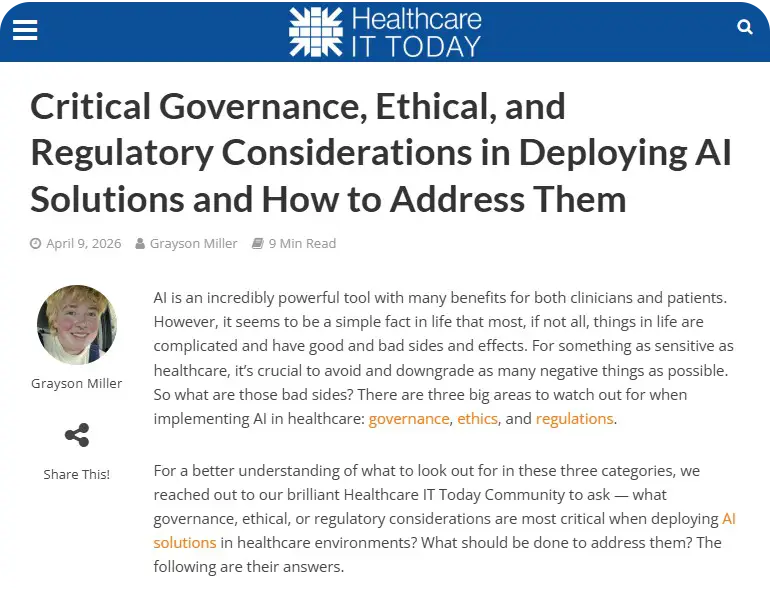
Critical Governance, Ethical, and Regulatory Considerations in Deploying AI Solutions and How to Address Them
04.01.26
Press coverage
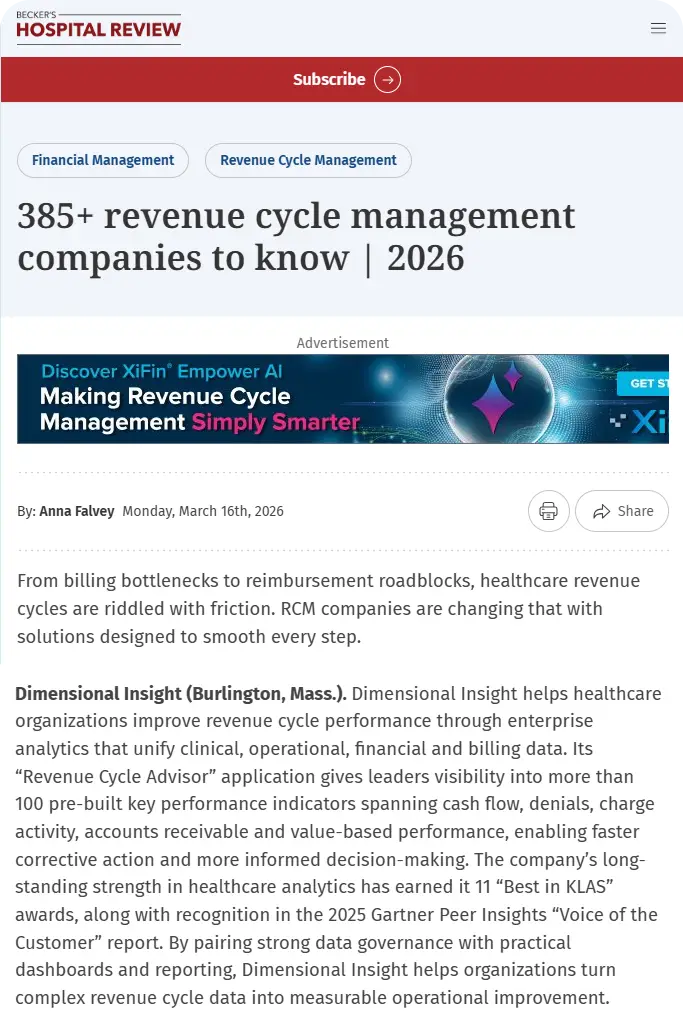
385+ revenue cycle management companies to know | 2026
03.31.26
Press coverage
AI Can Quickly Become a Confident Liar. Dimensional Insight Explains How to Prevent It.
Click to read the article
02.17.26
Press coverage
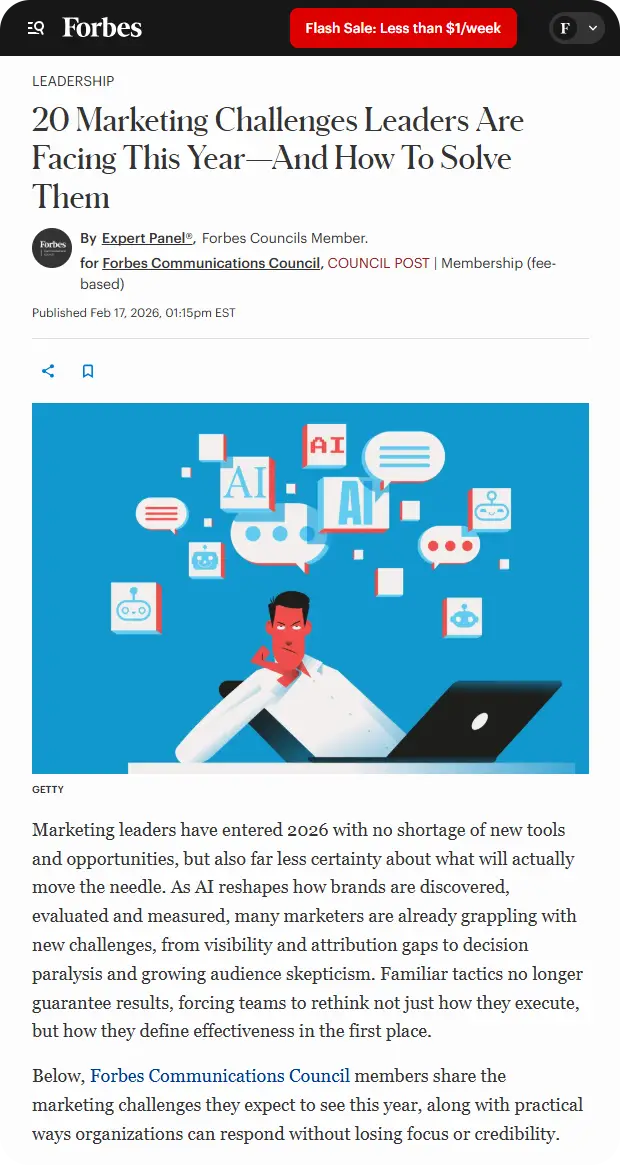
20 Marketing Challenges Leaders Are Facing This Year—And How To Solve Them
New Episode of the Knowledge Forum!
- DivePort: Controlling First-Load Behavior with Defaults
- Squashing vs. Diving: Comparing Spectre Flow and Spectre Dive
Watch new episode →
New Episode of the Knowledge Forum!
- DivePort Page Types
- Crosstab: Brand Analysis in NAVO
Watch new episode →
Press release
Dimensional Insight named a Strong Performer in the 2025 Voice of the Customer for Analytics and BI
Distinction in Gartner Report Is Based on Feedback and Ratings from End-User Professionals
Press release
Dimensional Insight Recognized in KLAS 2025 Consistent High Performers Report
Recognition underscores Dimensional Insight’s long-term commitment to trusted partnerships, measurable outcomes, and customer satisfaction in healthcare analytics
12.05.24
New Episode of the Knowledge Forum!
- Using Program Advisor
Watch new episode →
12.01.25
Press coverage
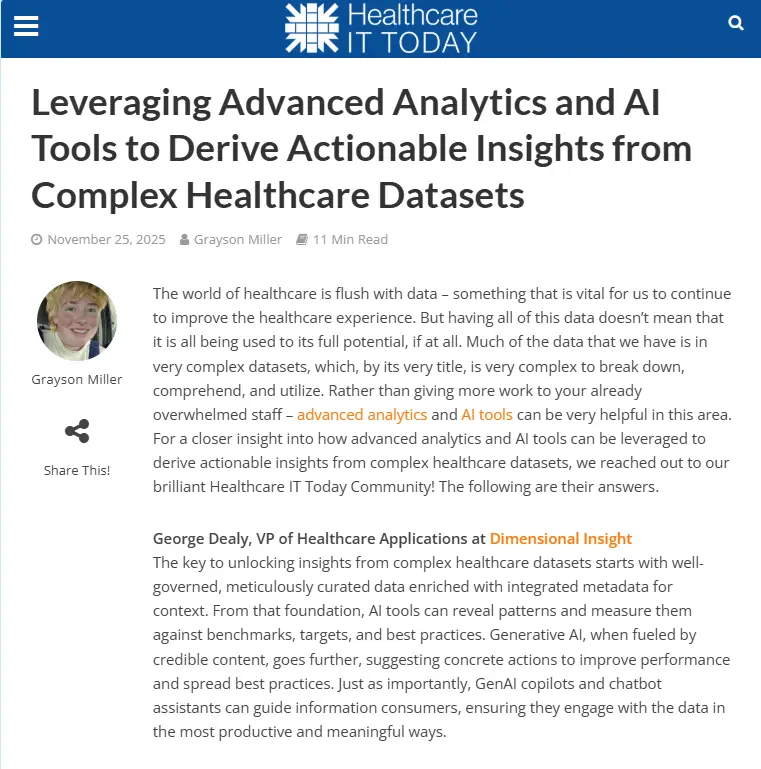
Leveraging Advanced Analytics and AI Tools to Derive Actionable Insights from Complex Healthcare Datasets
News Archive
2025
2024
2023
2022
2021
2020

Data is Key to Make Sustainability Progress in the Supply Chain
Companies across industries are always looking for ways they can make their organizations more sustainable. What many companies find is that their supply chains offer them opportunities to make improvements that can benefit the company both in terms of sustainability and in an overall business sense.
Sometimes companies release information about their sustainability plans when they submit it to regulators or industry experts. The calendar is different from organization to organization, though. Here’s a look at some of that timeline, how a few companies are working towards their goals through their supply chain, and the role data and analytics can play in helping to set and measure sustainability.

Healthcare Organizations Need Flexible Analytics to Adjust to Changes
The first thing many people think of when it comes to healthcare is something like a visit to a doctor. While that is certainly an important part of healthcare, the industry covers so much more than that. Important work is being done in everything from finding new medications to making healthcare more affordable.
Data is at the center of all aspects of the healthcare industry, including the decisions that lead to those types of major changes. Here are a couple of recent instances where data has played a role in changes meant to improve people’s lives. Let’s take a look at the decisions themselves, and how analytics factors in.